Three African American Mutual Aid Societies Under One Roof: A Legacy of Economic Empowerment
The Independent Order of St. Luke, the Grand United Order of Odd Fellows, and the Household of Ruth played vital roles in supporting African American communities that emerged in and around the Town of Blacksburg and Montgomery County, Virginia, following emancipation.
Over the years, this building has been known by various names, most commonly as Odd Fellows Hall. In recognition of the rich history and contributions of all three orders, it will now be referred to as St. Luke, Odd Fellows, & Household of Ruth Hall (StLOFHR).

A Brief History of African American Fraternal Orders
The Grand United Order of Odd Fellows (GUOOF) is an organization which broke away from Freemasonry many centuries ago in Europe. In the early 1800s, the Philomathean Lodge No. 646, Grand United Order of Odd Fellows, was established by male members of the Mother A.M.E. Zion Church, New York City, on 1 March 1843. The Order was given dispensation by the the Victoria Lodge No 448, Liverpool, England through the leadership of Illustrious Brother Peter Ogden, a mariner who was a member of the Victoria Lodge No 448. Soon after the establishment of Philometheon Lodge, the Household of Ruth was instituted as its counterpart order for wives, daughters, and mothers. In December of 1843 the New York order was granted permission from the Victoria Lodge to grant dispensations to other emerging lodges.
The motto of the Odd Fellows is “Friendship, Love and Truth.” The emphasis of the order was that ALL who enter the fraternal membership are on equal footing. The mission was to provide “relief” (mutual assistance) for the sick members and their families, to assist and defray the cost of their burial, to protect their widow from hardship, to educate orphans and to assist the disabled. Typically, members paid a fixed entrance fee and there after monthly dues.
There was also an element of secrecy in membership, which was steeped in biblically oriented rituals and codes. Michael Barga noted, “Many historians note the Odd Fellows as one of the most significant black mutual aid societies . . . and the hybrid of non-denominational Christian content and a Mason-modeled organizational structure may have been why.”

By the early 1900’s the GUOOF in the USA reported over 200,000 members with over 2,000 established lodges. The Roanoke Lodge No 3225 was given a dispensation on 13 March 1890. The Finance book for the Household of Ruth (MS1988-009) reports that there was a relationship with the Lodge in Christiansburg and the Grand Lodge in Roanoke, indicating that the Roanoke Lodge was the progenitor of both the Blacksburg and Christiansburg Lodges.
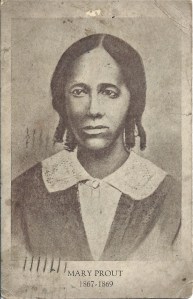
The Grand United Independent Order of St. Luke was founded in Baltimore in 1867 by Mary Prout (ca. 1801–1884), a free woman and educator. Originally established as a women-led mutual aid society, the organization provided insurance and burial assistance to its members. Over time, it expanded beyond Maryland.
In 1869, the Virginia chapter in Richmond separated from the Maryland organization and became the Independent Order of the Sons and Daughters of St. Luke. Maggie Lena Walker (1864–1934) of Richmond joined the Order in 1881 and, by 1895, helped establish the Juvenile Department under her leadership.
As the Order’s finances later became unsustainable, its leader, W. M. T. Forrester, resigned in 1899. At the Hinton, West Virginia, convention, Walker assumed leadership as Right Worthy Grand Secretary and transformed the organization into a powerful system of cooperative economics, ultimately serving more than 100,000 Black women and men across 26 states.
Under Walker’s leadership, the Order fostered economic empowerment—particularly for women—by creating institutions that promoted financial independence and stability. These included a department store that provided employment, a newspaper, and the St. Luke Penny Savings Bank. Walker’s leadership made her the first woman in the United States to serve as president of a bank. (Marlowe, Gertrude Woodruff. A Right Worthy Grand Mission: Maggie Lena Walker and the Quest for Black Economic Empowerment. Washington, DC: Howard University Press, 2003.)
Let us put our moneys together … and reap the benefits ourselves.
Maggie Lena Walker
The Union of Blacksburg’s St Luke, Odd Fellows and Household of Ruth Orders Under One Lodge
Tadmore Light Lodge No. 6184 of the Grand United Order of Odd Fellows was established in the early twentieth century, likely in 1904, based on entries in the Minute Book dating from 1904 to 1911 (pp. 130–131). Additional context on the Order is provided in an article by Anthony Wright de Hernandez. Although the building remains extant, the lodge itself ceased to function in the 1960s.
Household of Ruth No. 5533 comprised the mothers, wives, and daughters of members of Tadmore Light Lodge No. 6184. Established several years after the men’s lodge, this women’s auxiliary played a vital role in the operation of the lodge and in supporting the well-being of the surrounding community.
This interview with Beatrice Freeman Walker sheds light on St. Francis Council No. 235 of the Independent Order of St. Luke, which was established by Mrs. Maggie Lena Walker in August 1902. Beatrice Walker’s mother, Bessie Briggs Freeman, was deeply committed to the Order and played an active role in extending mutual aid networks beyond the local area.

Construction of the St Luke & Odd Fellows Hall (1905-06)
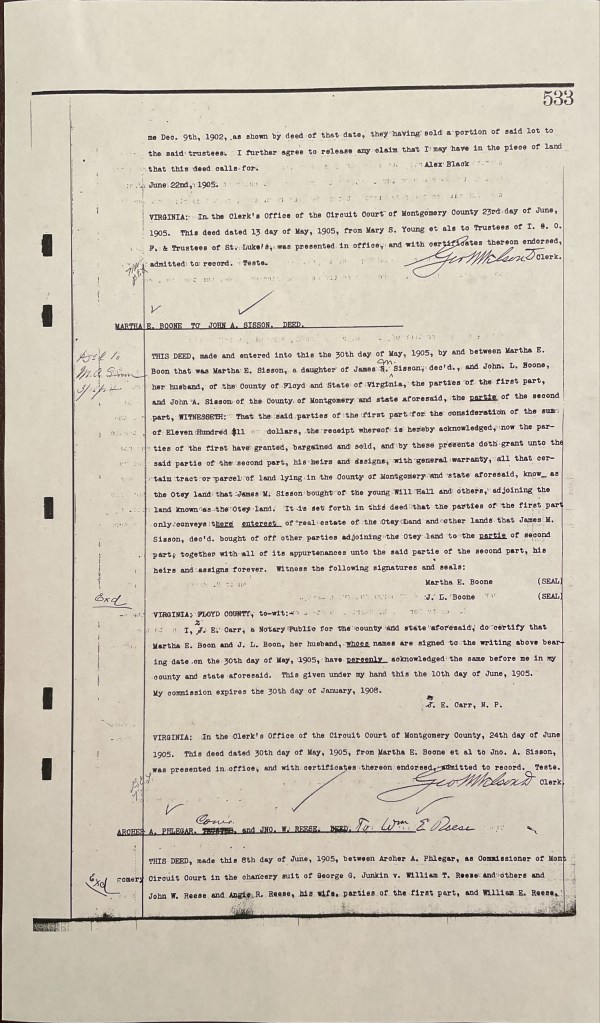
A land deed (Vol 53, pages 532-533) dated 13 May 1905 from George & Lelia Williams and William & Mary Lou Young to the trustees of both the Order of Odd Fellows and the Independent Order of St Luke. The copy of the deed follows with a transcription. This indicates that the lot was divided and sold to the trustees of the union of both orders.

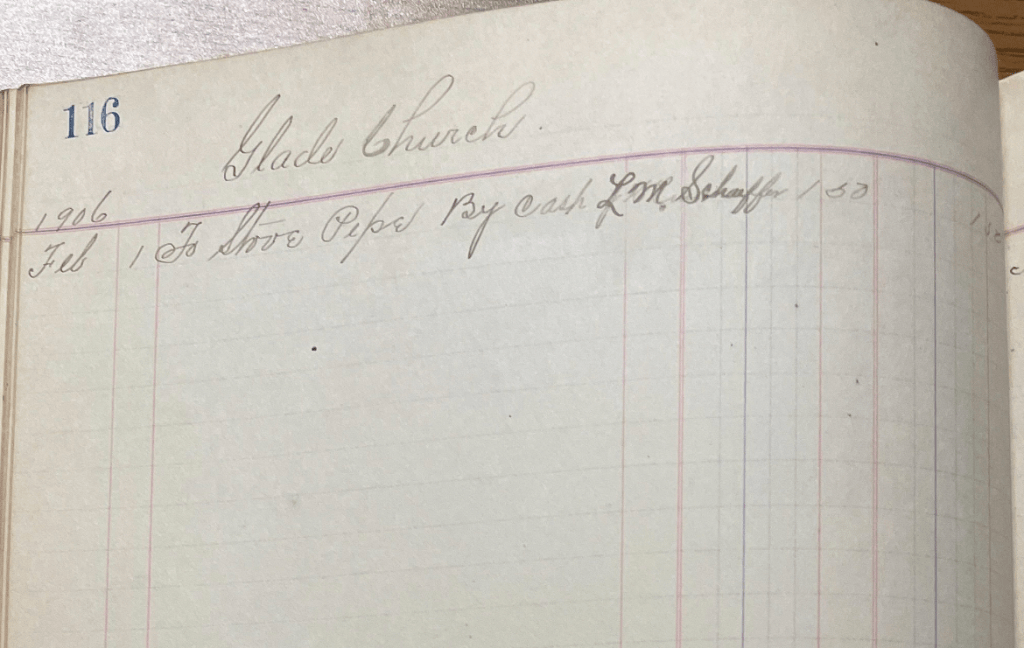
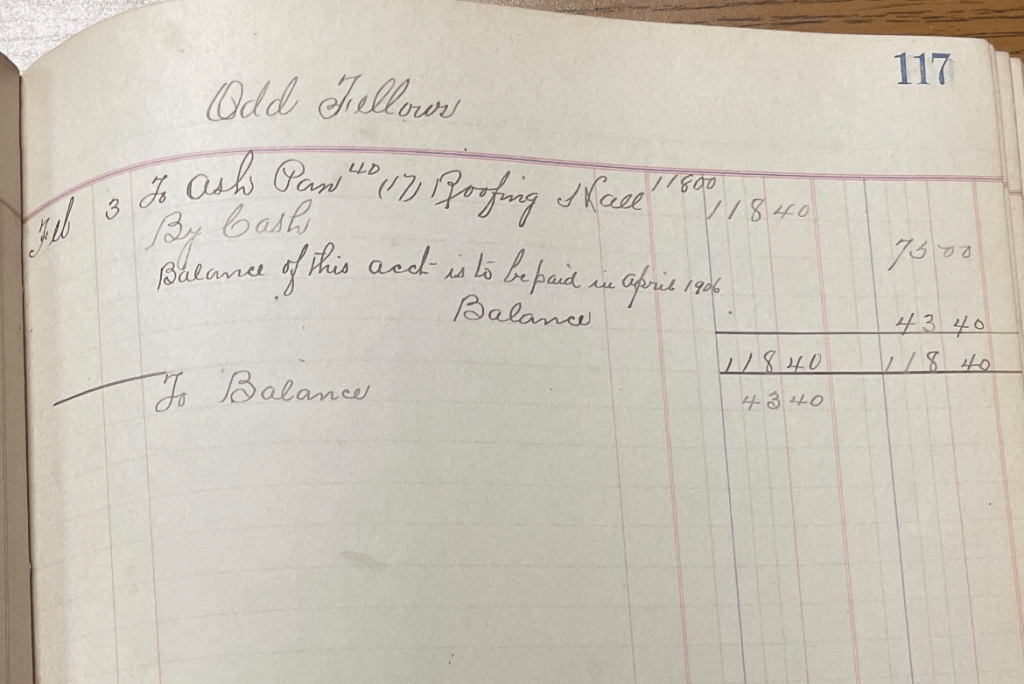
The lodge was constructed between 1905 and 1906. A ledger from an unidentified hardware store—possibly Effinger’s—records a charge for metal roofing (“ash pan (17) roofing”) to the Odd Fellows Lodge (Hall) in February 1906. The ledger, which references numerous Black residents of Blacksburg during this period, indicates that the building was under roof by that date.
The structure was a collaborative effort and functioned as a shared meeting and ceremonial space for all three orders, which alternated meeting days and times.
The building’s construction coincided with the height of Maggie L. Walker’s expansion of the Independent Order of St. Luke. By this period, the St. Luke Penny Savings Bank—chartered in 1903—was already supporting Black communities across Virginia.
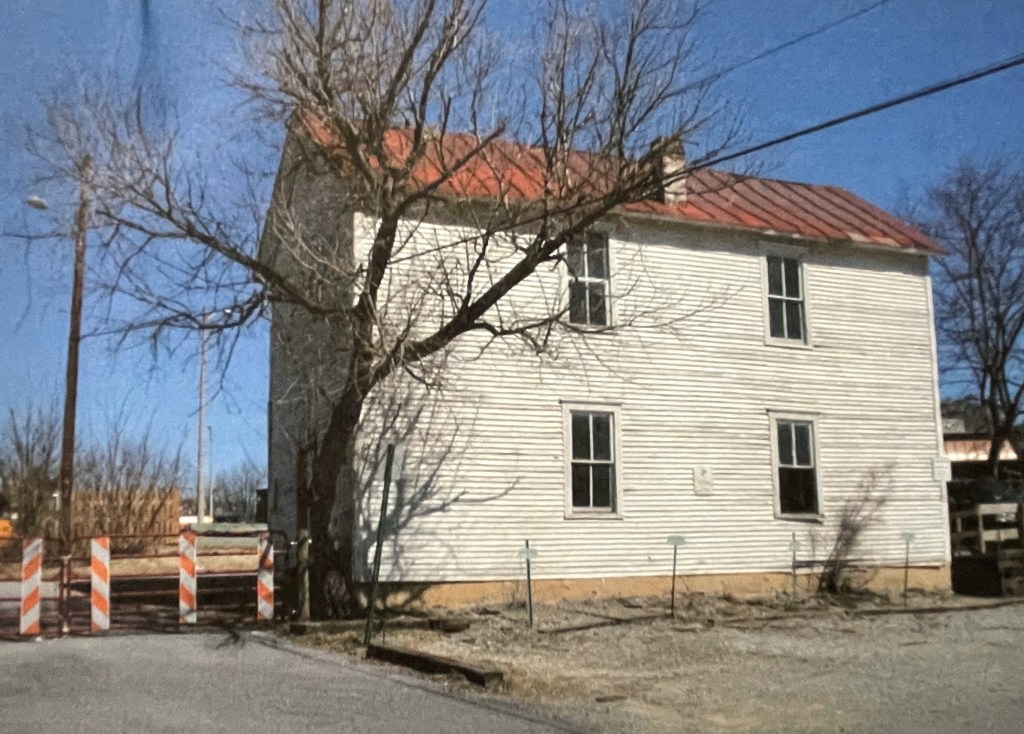
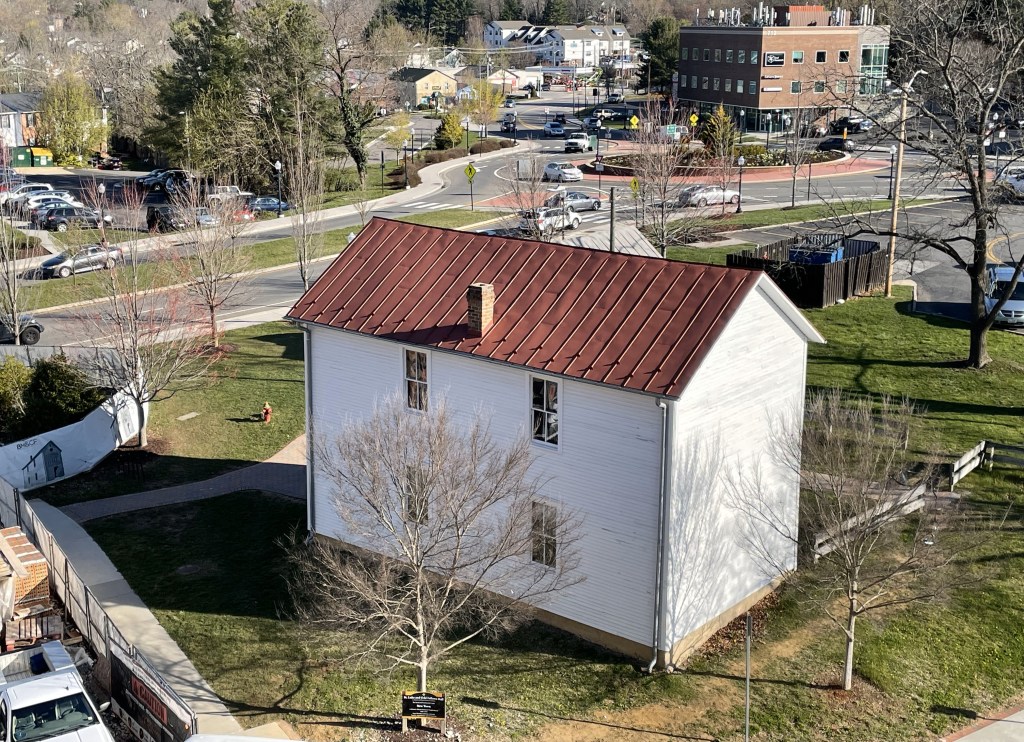
Location of the St Luke & Odd Fellows Hall, Blacksburg, Virginia
Currently the official address of the St Luke, Odd Fellows, & Household of Ruth Hall is 203 Gilbert Street. When this building was erected, the hall was located on New Town (Newtown) Alley. New Town was a neighborhood of 15-20 African American families, which slowly developed after emancipation.
This 1928 Sanborn Fire Map of Blacksburg indicates the location of the Hall, the corner of Giles Road (Newport Road) and New Town Lane. The lane which traveled west from Newport Road (Giles Road), through New Town Alley exited on Peppers Street. Pepper Street was the road which connected Blacksburg to the Prices Fork community. Lucy Lee Lancaster’s map provides an overview of the road system.


Documents
- St Luke & Odd Fellows Deed – May 1905, Vol 53/pg 532-533. Transcription.
- 2005 Deed of the St Luke & Odd Fellows Hall to the Town of Blacksburg from the court appointed trustees, Beatrice Walker, Aubrey S Mills, Sr & Walter Lewis, to the Town of Blacksburg, August.
- National Registration of Historic Places Registration Form – 27 July 2005
Links to Resources with Notes
- Blacksburg, Virginia Odd Fellows Records, 1902-1969 (MS1988-009), Virginia Tech Special Collections & University Archives Online. “The Blacksburg Odd Fellows lodge was probably formed in December of 1904. It was a branch of the Grand United Order of Odd Fellows, a mutual relief society for people of color. The Blacksburg, Virginia Odd Fellows Records consist of financial records, correspondence, minute books, brochures of several annual conferences, by-laws and odd issues of the Odd Fellows Journal for the men’s lodge. There are also correspondence, minutes and financial records for the women’s Household of Ruth.”
- Receipt for regalia order, household of Ruth (MS1988-009) – This is a 31 May, 1919 receipt to Marie Johnson, W.R., PO Box 303, Blacksburg, Secretary of Household of Ruth, Lodge #5533 for first payment of $37.60, and $5.00 per month for a total of $76.25. The order consisted of a set of 14 officer collars, 12 floormembers, 26 turbans
- Finance book for the Household of Ruth (MS1988-009) – The digital images of the book with beginning date of 9 July, 1918 to 1921.
The Household of Ruth Lodge, #5533 met at the Odd Fellows Hall and paid for half of the expenses collected from monthly dues. These minutes provides names of members, both Brothers and Sisters who elected governing members and paid dues (in 1921=half a dollar to a whole dollar/month), “sick dues” to people in need($5/two weeks), taxation fees, hack rides to funerals, and burial fees (between $50-60).
An examples of important information gleaned from this document include 1) mutual aid: Recorded for 1 Feb 1921, the leaders moved to pay two weeks of “Sick Dues”, value of $5, to Will Mullens. The next entry noted that $38.95, a portion of the $60.00 required, would be paid for Will Mullens’ burial. 2)The Household of Ruth Lodge had a relationship with both the Christiansburg and Grand Lodge in Roanoke. The entry for 5 April, 1921 mentions the Christiansburg Lodge and the 17 May, 1921 mentions Sister Scott and Sister Maria Johnson attending as delegates.
Names of people mentioned in this document: Margrett Anderson, Maria Anderson, Mariah Anderson, Martha Anderson, Mellie Anderson, Nash Anderson, Ethel Brown, Ester Collins, Daisy Dooly, Ella Green, William M. Green, Janie Hampton, John Hampton, Lucy Hampton, Rebecka Hampton, Lucky Harriston, May Headen, Virginia (Vergie) Jackson, Lizzie Johnson, Marie Johnson, Hattie Jones, Will Keys, Gertrude King, Ellane Mead, F.H. (Floyd) Mead, Ellison Meade Pitcher, Elaine Meader, Anner Mills, Martha Mills, Rachel Mills, Alease (Aloise) Mullens, Will M. Mullens, JF Neelly, Victoria Parson, Anna Price, Annie Price, Carrie Price, Claudia Price, Clodie Price, Fannie Price, Millard Price, Rosa Price, Vern Price, Zetella Price, H.P. Saunders, Harrison Saunders, Annie E. Scott, W Shepard, Grandville Smith, Jennie Smith, Tylor Smith, Ethel Tauksley, Rosa Toliver, Georgia Trussell, Callie Wade, Celia Wade, Clisby (James C) Wade. - Household of Ruth Membership Questionnaires (MS1988-009)
- Grand United Order of Odd Fellows, Tadmore Light Lodge, No 8184. Anthony Wright-Hernandez, Feb 2017, explains about the origins of this Black Mutual Society, its importance to African American life in Blacksburg, and its connected relationship with Christiansburg, Roanoke and even further away, Richmond.
Other Mutual Aid Organizations
- Please NOTE! The Grand United Order of Odd Fellows is a different organization than the Independent Order of Odd Fellows. That USA organization was founded in 1819, under the similar mission and values as the GUOOF, but for white people only. That exclusion was removed in 1971, and in 2001 women were invited to join the order.
- Ora Brown Stokes and the Richmond Neighborhood Association. Angela Lehman. Maggie L Walker created the St Luke Penny Savings Bank in the Jackson Ward neighborhood in Richmond, which influenced the operations of the Blacksburg St Luke Council. Ora Brown Stokes was interested in promoting education and juvenile justice, especially for females. She set the stage for Maggie L Walker’s work.
- Grand United Order of Odd Fellows in America. Michael Barga. A comprehensive article about the Odd Fellows and the Household of Ruth. Important facts that between 1868 and 1886, the number of lodges and membership increased significantly.
- The Official History and Manual of the Grand United Order of Odd Fellows in America. Charles H. Brooks. 1902. Of interest: page 140, 13 March 1890, Roanoke Lodge 3225 was given dispensation, located in Roanoke City, VA. In 1901 the American Grandmaster was E.H. Morris, Dep Grand Master was L.L. Lee and Grand Secretary was C.H. Books. The 45th General meeting was held on 2 October, 1900 in Louisville, Ky. On page 239 are directions for laying a corner stone of a new building: A stone, small tin box, 3 silver or silver-plated goblets, a small Bible, sufficient quantity of earth, corn and water. Page 263 explains the format of the Annual Report. Includes “Brothers Relieved, Brothers Buried, Widows Relieved, Orphans Relieved, Funerals.”
- Some Efforts of American Negroes for Their Own Social Betterment. Report of an Investigation under the Direction of Atlanta University; Together with the Proceedings of the Third Conference for the Study of the Negro Problems, Held at Atlanta University, May 25-26, 1898. Edited by W. E. Burghardt Du Bois, Ph. D.
- W. E. B. Du Bois (William Edward Burghardt), 1868-1963, edited by Economic Co-operation Among Negro Americans. Report of a Study made by Atlanta University, under the Patronage of the Carnegie Institution of Washington, D.C., together with the Proceedings of the 12th Conference for the Study of the Negro Problems, held at Atlanta University, on Tuesday, May the 28th, 1907
Independent Order of St Luke Articles
- Right Worthy Grand Council Independent Order of St Luke
- Independent Order of St Luke and Maggie L. Walker
- St Luke Penny Savings Bank
- Maggie L Walker Home
- National Museum of African American History & Culture
- Maggie Lena Walker, How the daughter of a former slave became a banker pioneer
- National Woman’s Museum Article
- St Luke Hall: A Beacon of Black Business
- Womanist Consciousness: Maggie Lena Walker and the Independent Order of Saint Luke, Elsa Barkley Brown
Other GUOOF Lodges In The Region
The Blacksburg Lodge, Tadmore Light # 6184 shares a similar name to the Pulaski City Lodge, Lone Light #3026 which was established about 12 years prior. The Roanoke Lodge, Roanoke #3225 was established in 1890. Newbern, Golden Key #1733 was established in 1876. Buchanan, Buchanan #3068 was established in 1888, the same year as the Pulaski City Lodge.
For more information go to the following:
- Gathering African American Past – A collection of African American lost history and its Facebook companion
- St Luke, Odd Fellows and Household of Ruth Facebook companion to this page.
 Gathering Blacksburg History