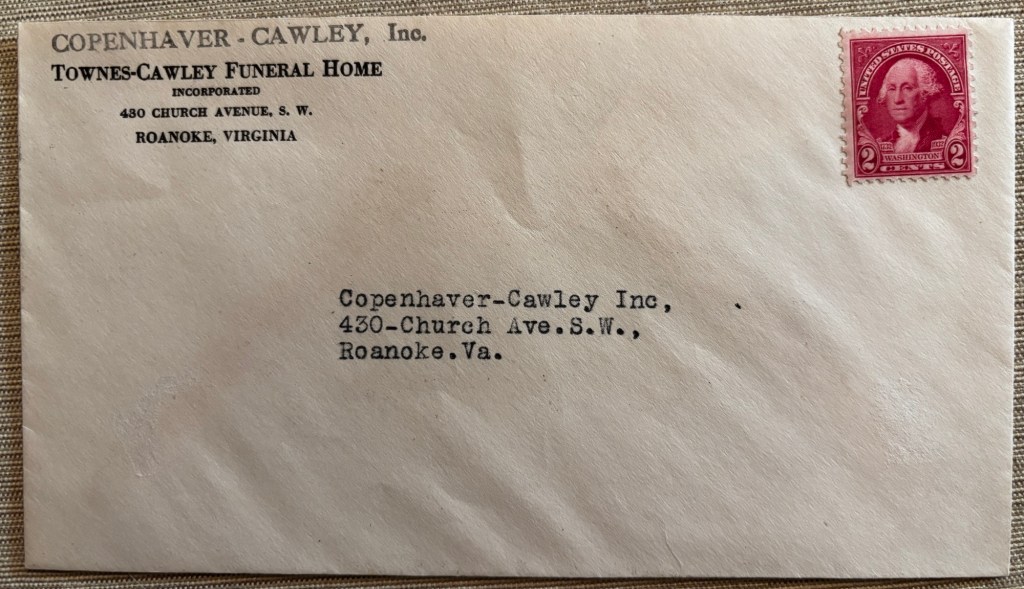
One Envelope, A Regional Funeral Home Story
Sometimes a single envelope can lead us much farther than expected.
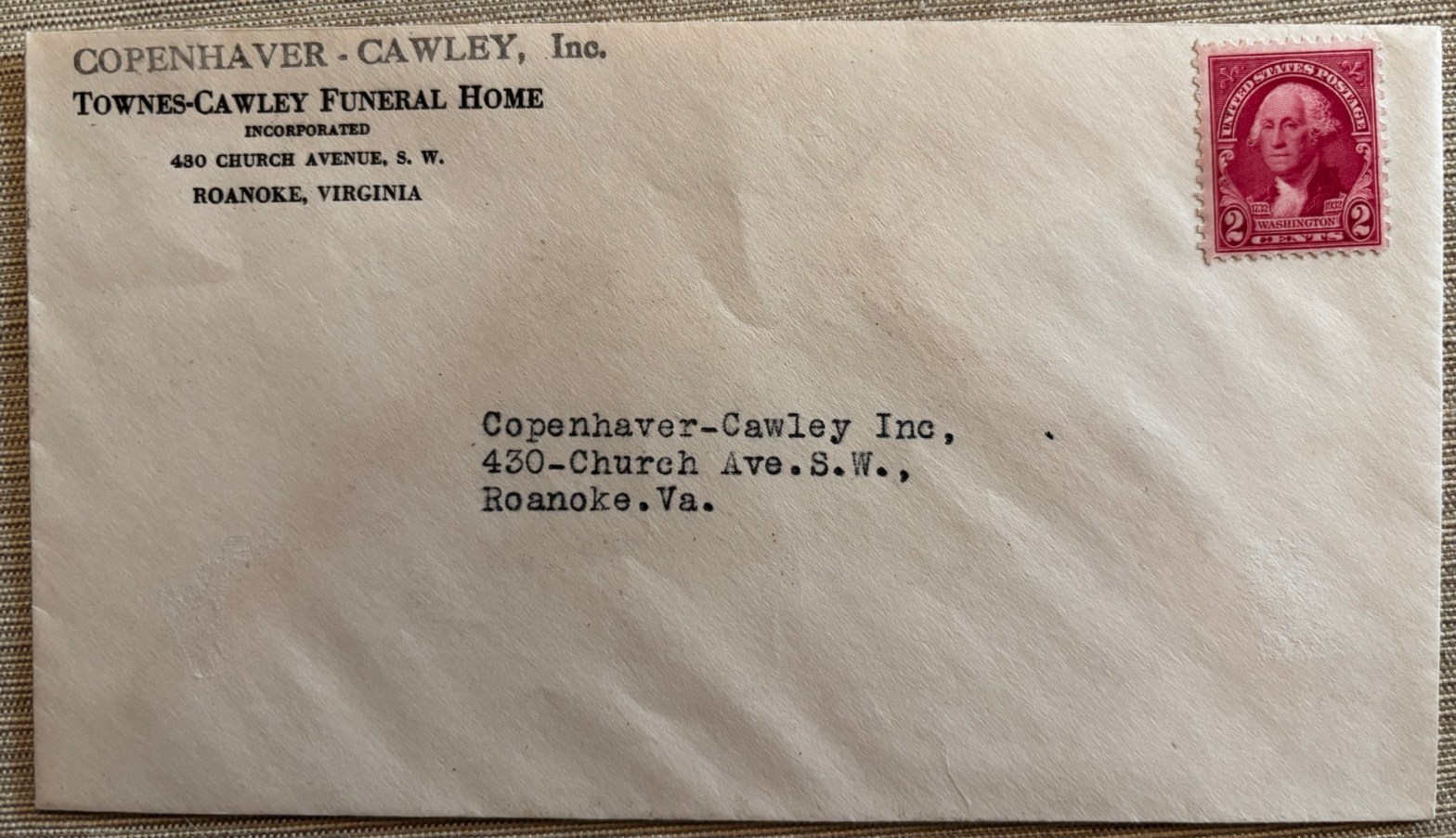
This envelope, from Copenhaver-Cawley, Inc., Townes-Cawley Funeral Home in Roanoke, tells a story that reaches beyond Roanoke and into the New River Valley during the 1920s, 1930s, and 1940s.
We have not yet found evidence that Copenhaver-Cawley itself tended to a deceased person from Montgomery County, but we have found evidence of other Roanoke funeral homes, including Oakey’s, serving families in the Shawsville and Elliston area. That connection makes sense. Montgomery County was linked directly to Roanoke by the railroad, making Roanoke an important commercial center for families and businesses throughout the region.
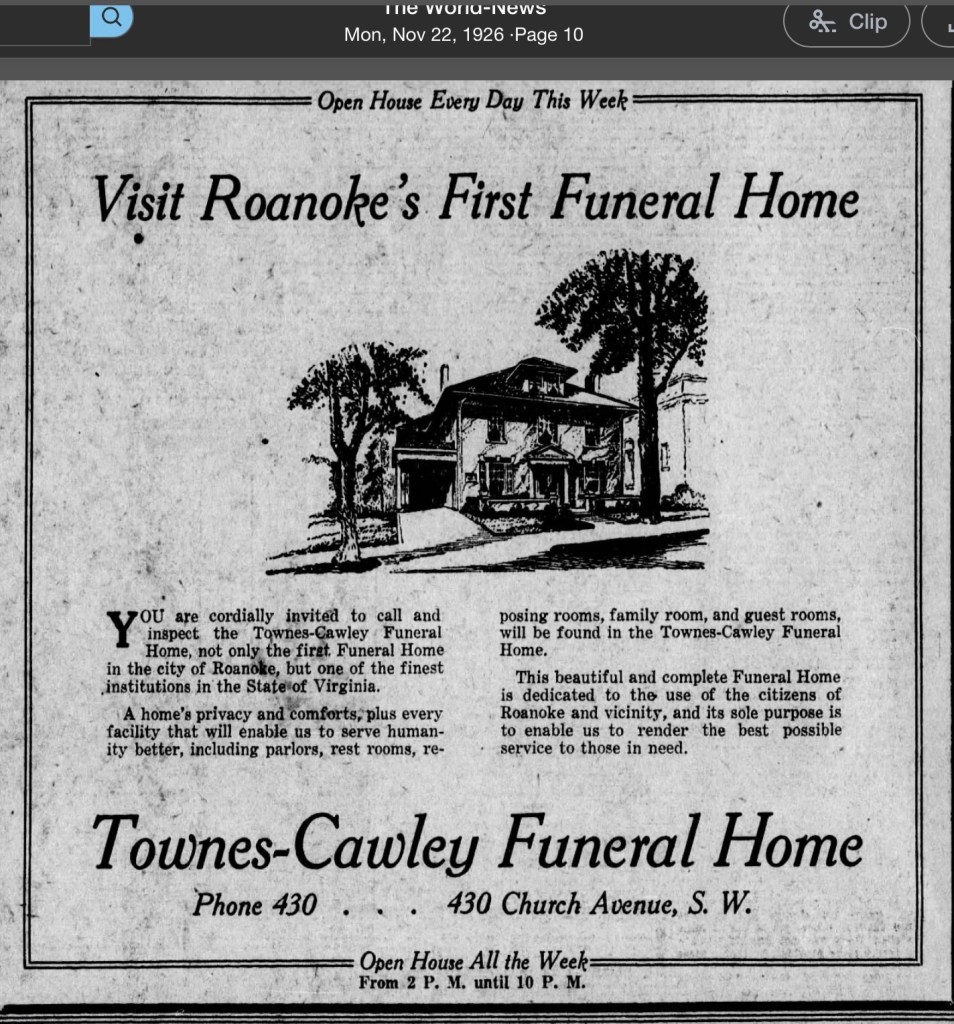
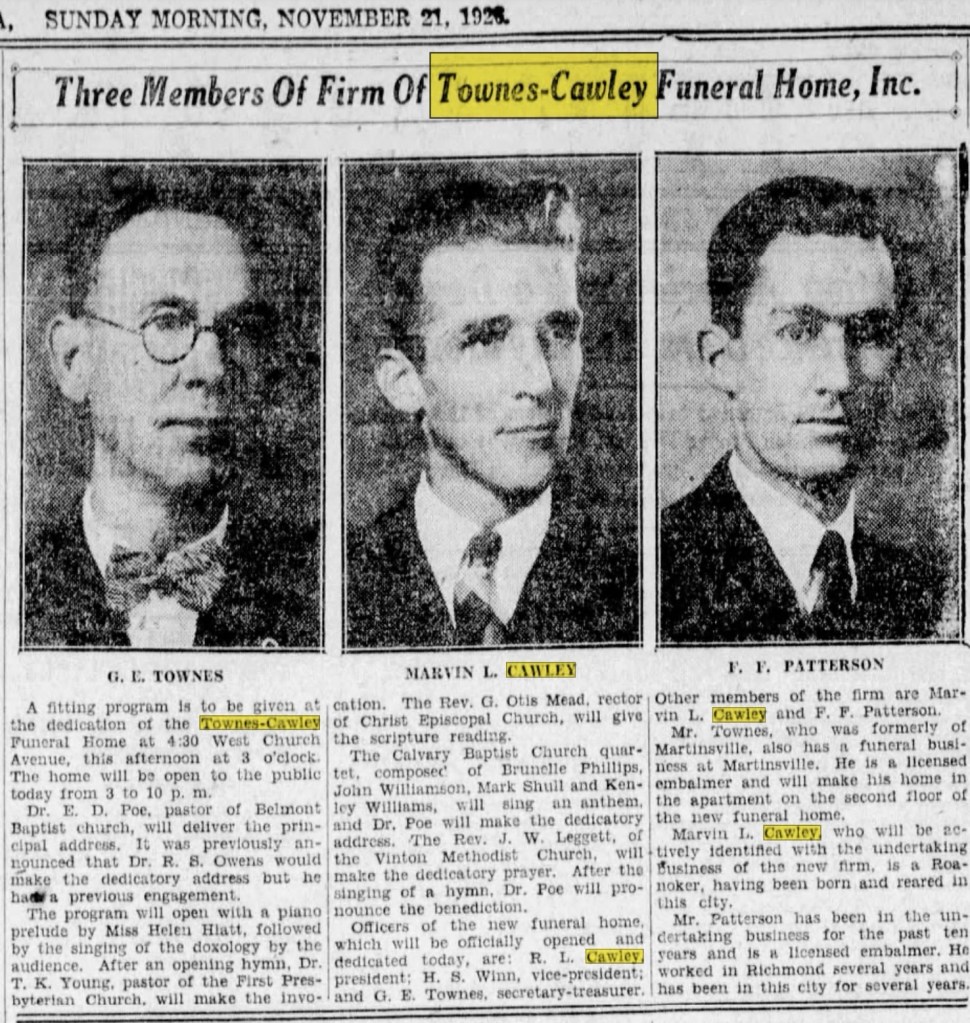
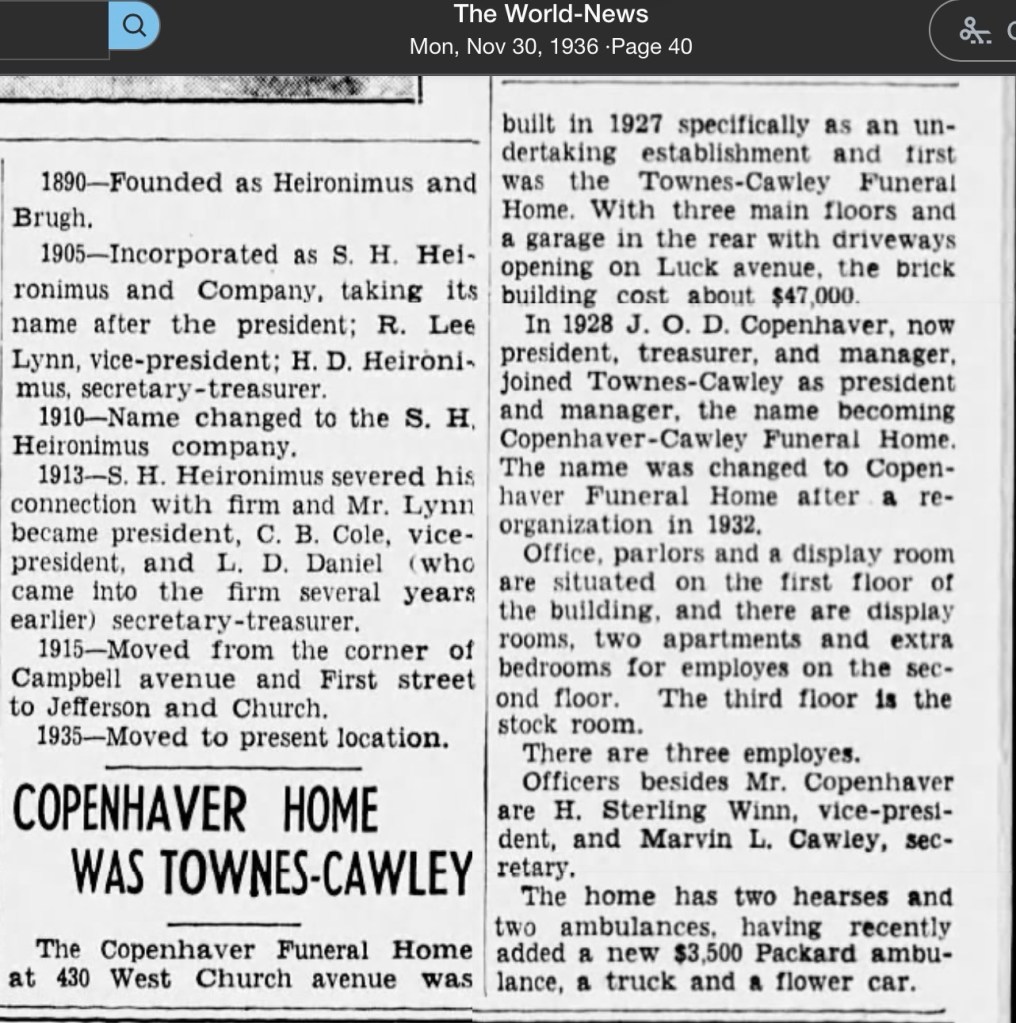
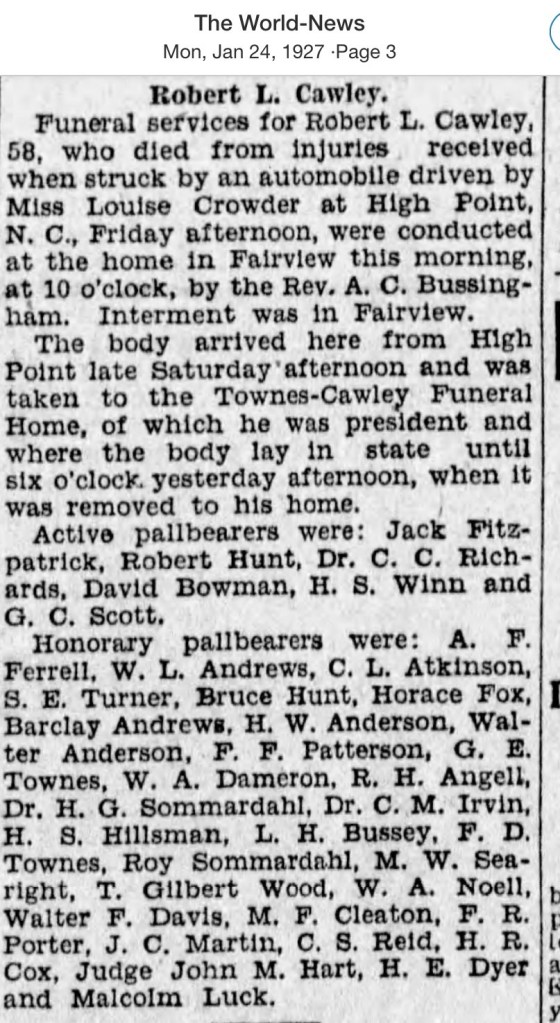
The story of this particular funeral home begins in 1926, when Robert L. Cawley (1868–1927) partnered with G. E. Townes, secretary-treasurer, H. S. Winn, vice president, his son Marvin L. Cawley, undertaker, and F. F. Patterson, licensed embalmer, to establish a new funeral business. The doors opened on January 1, 1927, at 430 West Church Avenue, SW.
Townes came from Martinsville and was a licensed embalmer. Patterson brought ten years of embalming experience from Richmond. Marvin Cawley was an undertaker and also operated the Cawley Furniture Company in Roanoke.
Then, just weeks after the funeral home’s opening, tragedy struck the family.
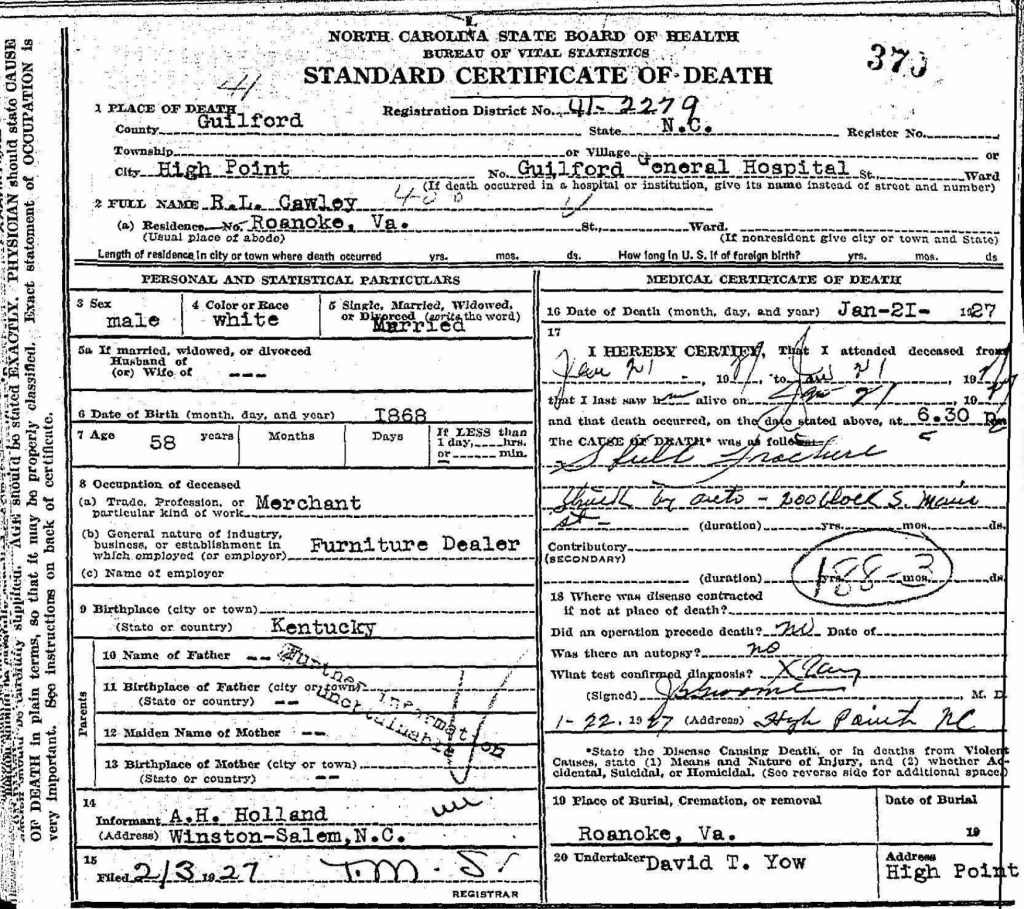
On January 21, 1927, Robert L. Cawley was killed in an automobile accident in High Point, North Carolina, while on a furniture-buying trip. His death came at the very beginning of the new funeral home’s history.
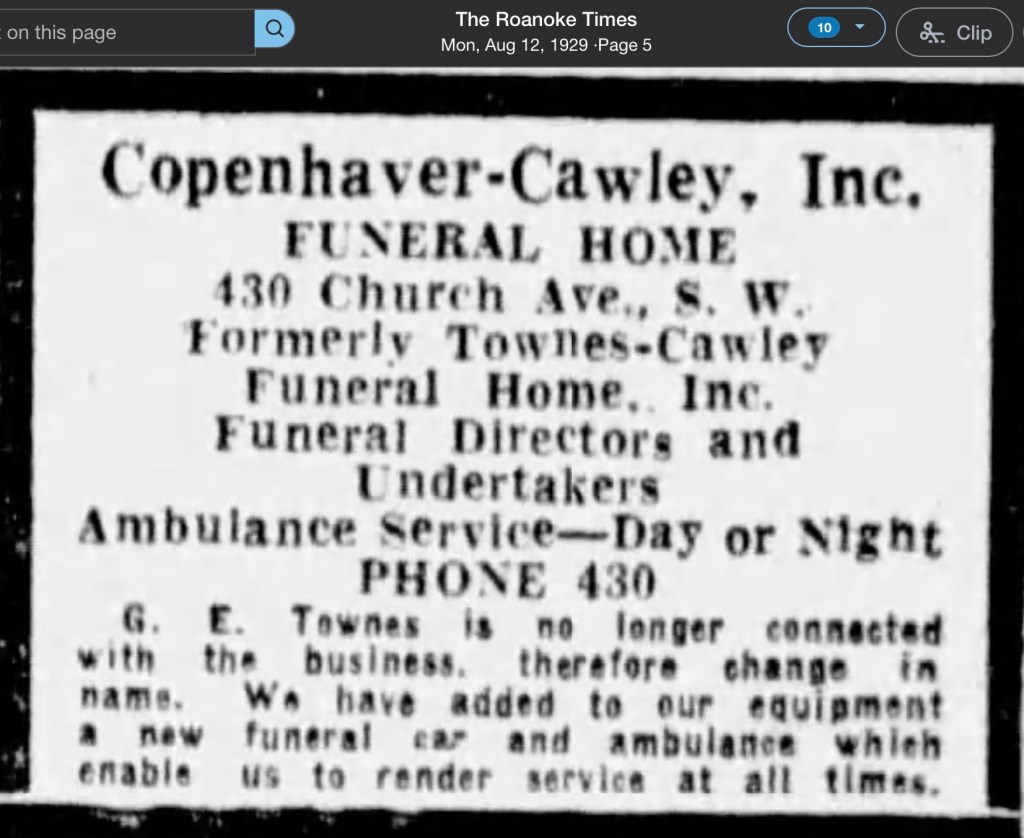
In 1928, J. O. D. Copenhaver joined the business as managing partner, and the name became Copenhaver-Cawley. By 1932, it was operating as Copenhaver Funeral Home, with Copenhaver in full control.
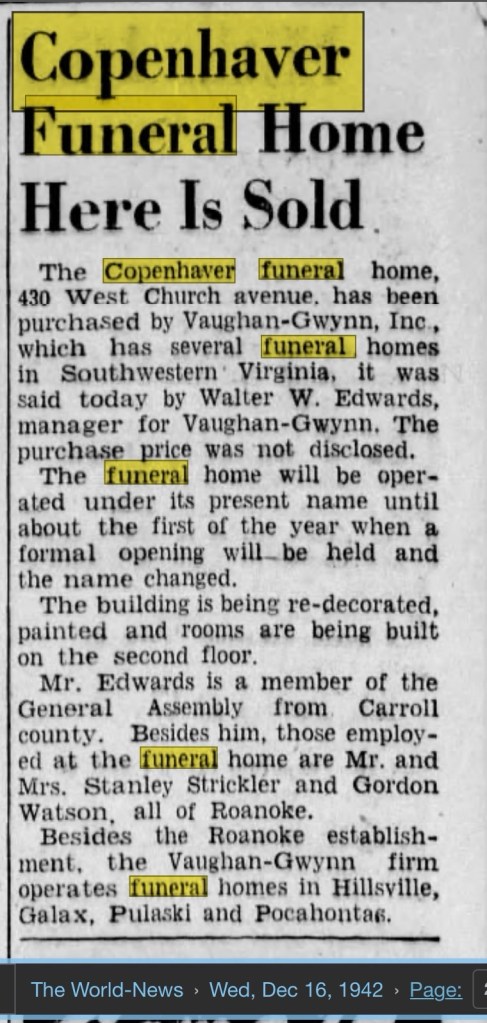
The business continued until 1942, when it was purchased by Vaughan-Gwynn. The Roanoke operation was then associated with funeral directors Stanley and Mrs. Strickler and Gordon Watson, with Watson serving as the licensed embalmer. The group also operated funeral homes in Hillsville, Galax, Pulaski, and Pocahontas, illustrating just how interconnected the funeral business had become across Southwest Virginia and the surrounding region.
There is another important piece to this story: furniture stores and funeral homes were often closely connected.
The Cawley Furniture Company began in 1912 at 503 South Jefferson Street in Roanoke. Furniture dealers were natural suppliers of caskets, and in some cases, as with the Cawley family, the same family was involved in both businesses.
So this little envelope represents much more than an address.
It points to a regional economy of death care, one that connected funeral directors, embalmers, furniture dealers, railroads, and families across Southwest Virginia. For communities such as Shawsville, Elliston, and elsewhere in Montgomery County, Roanoke was not a distant city. It was part of the commercial world they depended upon.
And this is exactly why objects like this matter to our research. We are still following the breadcrumbs. One envelope leads to a funeral home, which leads to a family, which leads to furniture businesses, transportation networks, professional licensing, and eventually back to the families of the New River Valley.
The envelope may not yet tell us who was carried through Copenhaver-Cawley’s doors from Montgomery County, but it has already helped us understand the larger world in which local families made arrangements for the dead.
There is still more to uncover.