
Tending to the Dead in Central Appalachia
Over time, the responsibility for caring for the deceased shifted from families to professional funeral directors. Initially, communities came together to ensure prompt burials, with women preparing the body and men handling coffin construction and grave digging.
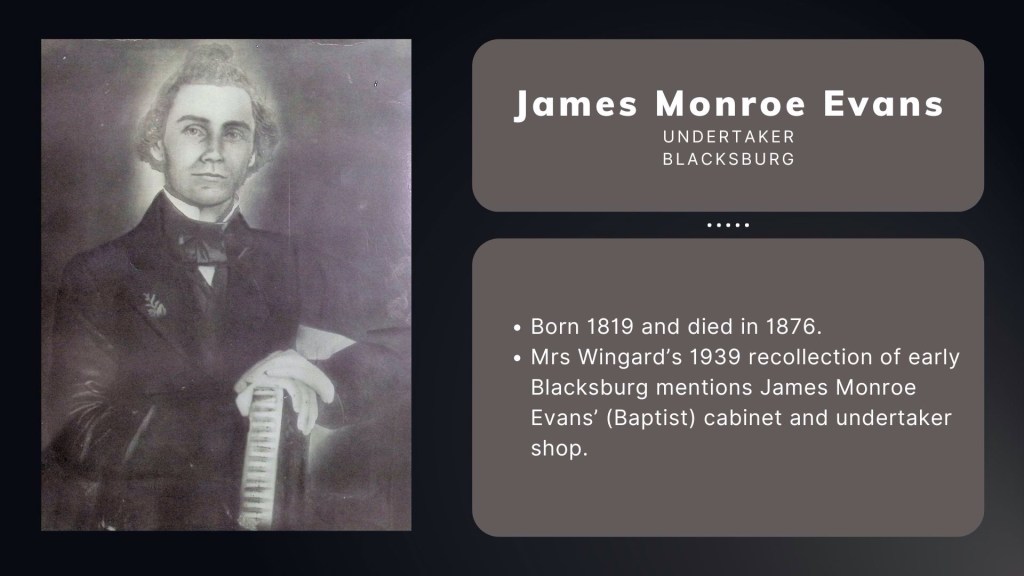
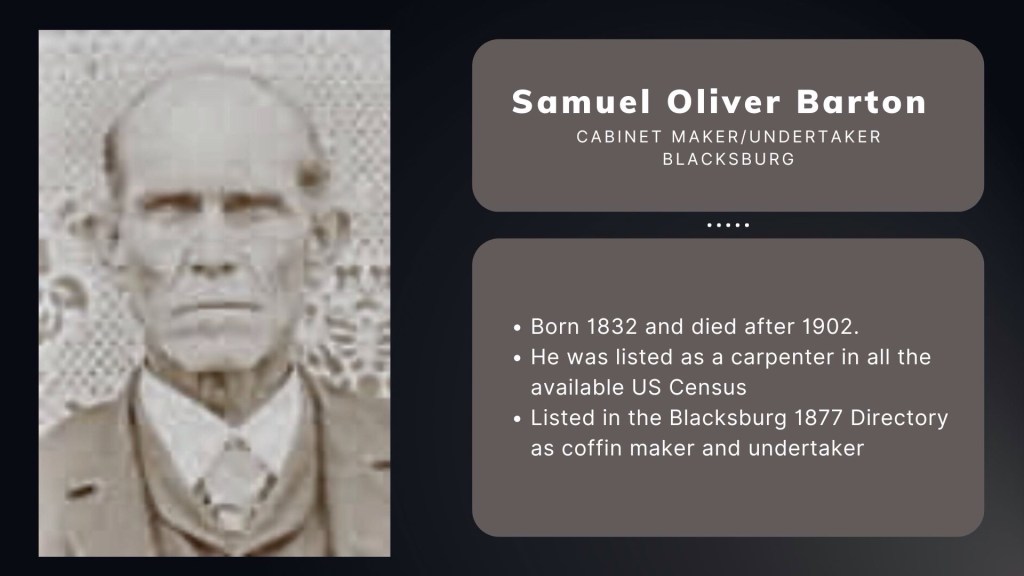
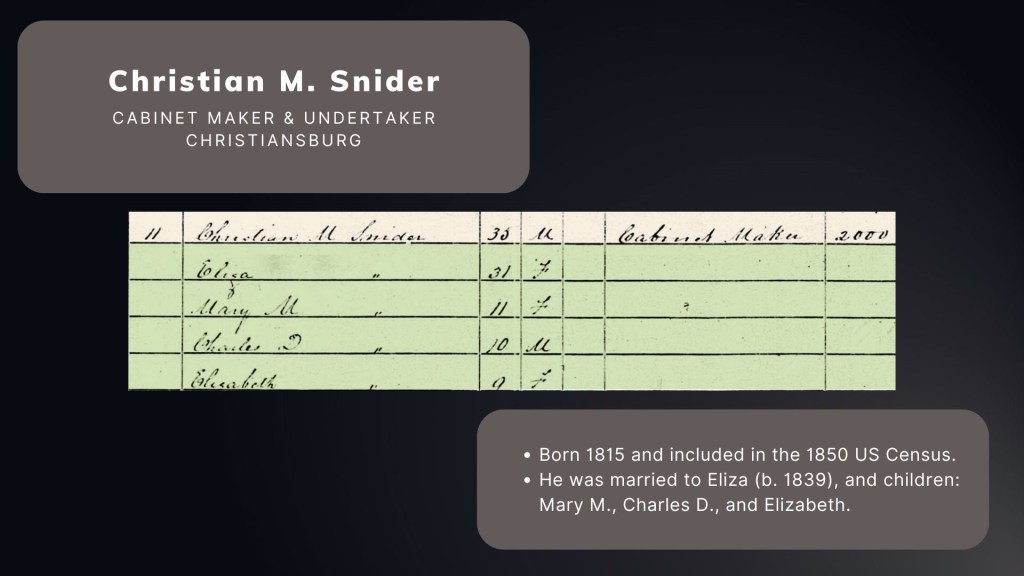
Before refrigeration and embalming techniques, individuals were buried swiftly to prevent decomposition. By the 1840s in central Appalachia, families began hiring undertakers, often cabinetmakers, who transitioned into this role due to their expertise and resources.
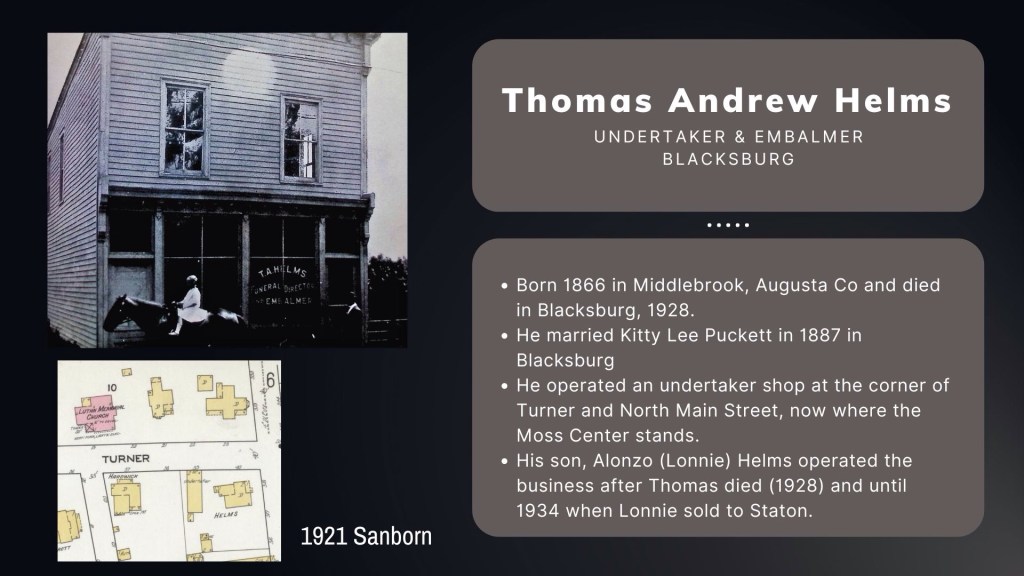
Embalming practices gained acceptance by the 1870s, allowing for elaborate mourning customs. By 1890 in Blacksburg wealthy deceased were embalmed in their home; however, as embalming became affordable, undertakers established dedicated spaces in their shops for preparation, shifting away from home visits.
Virginia led the way in requiring embalmer certification in 1894, following the establishment of the National Funeral Directors Association. By the 1930s, undertakers adopted the title of Funeral Home Directors, expanding their roles to provide community services like ambulance transport.
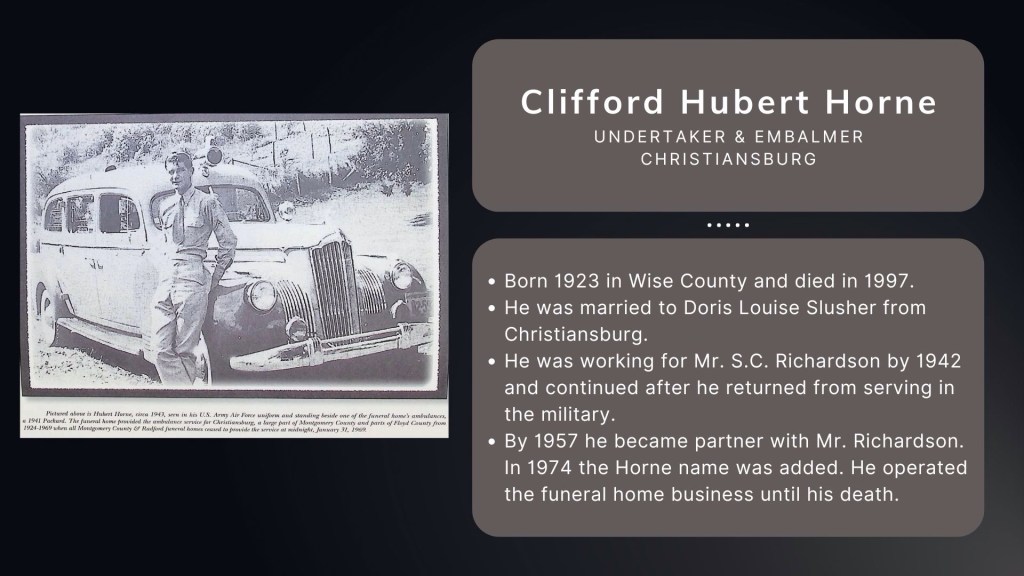
During the 1930s, funeral home vehicles served as both ambulances and hearses, highlighting the importance of trained personnel during transport. In 1949, the Lion’s Club, Jillian Wise, and a funeral director in Christiansburg collaborated to establish the first aid and life-saving crew, laying the foundation for the local Rescue Squad.
BLACKSBURG






CHRISTIANSBURG



Shawsville/Elliston/Lafayette

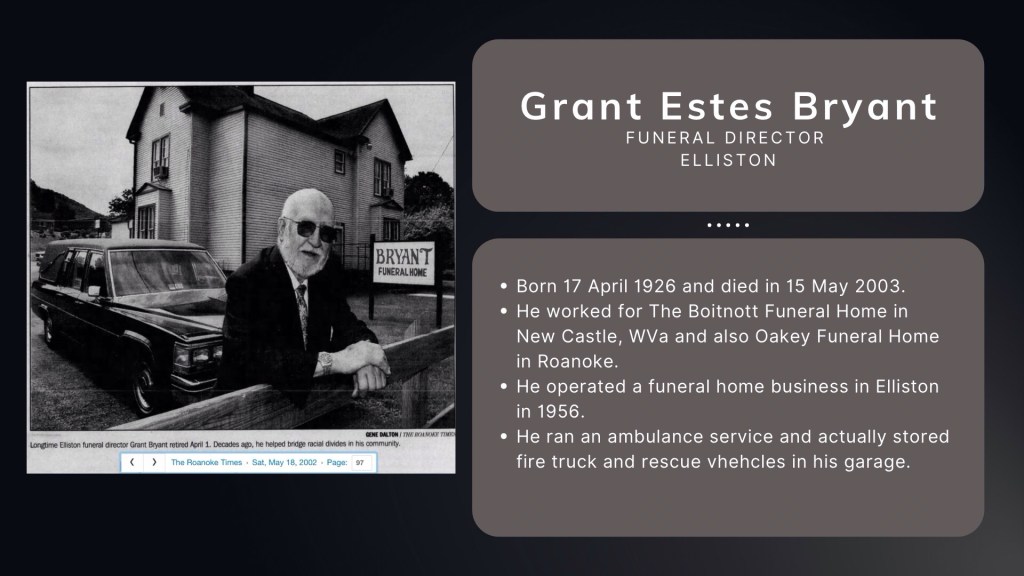
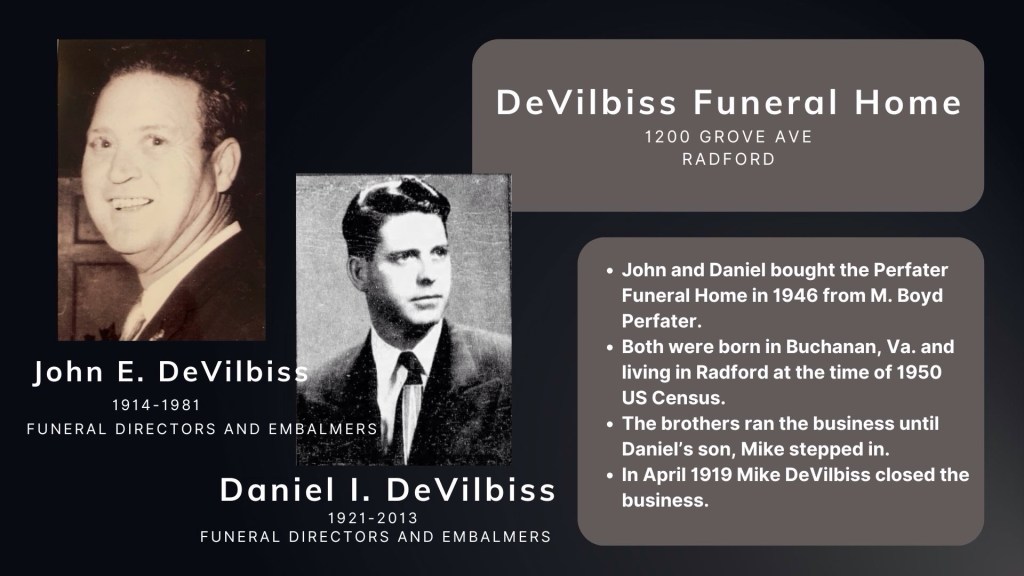
Radford (Many Montgomery County residents were buried by Radford and Salem Funeral Home Directors)



 Gathering Blacksburg History