
Brief History
- Christ Episcopal Church purchased land from Mr. John Lybrook in the spring of 1874. The church and a bell stand were built by 1875.
- The Lybrook property was purchased and used as a parish house in the April 1921
- Ground was broken for the new parish house and student center, after the Lybrook house was razed, on 23 November 1941.
Links & Social Media
Blacksburg, Memories of the Way We Were
Search on Lybrook for information
Lybrook Row (Buzzards’ Roost or Hell Row)
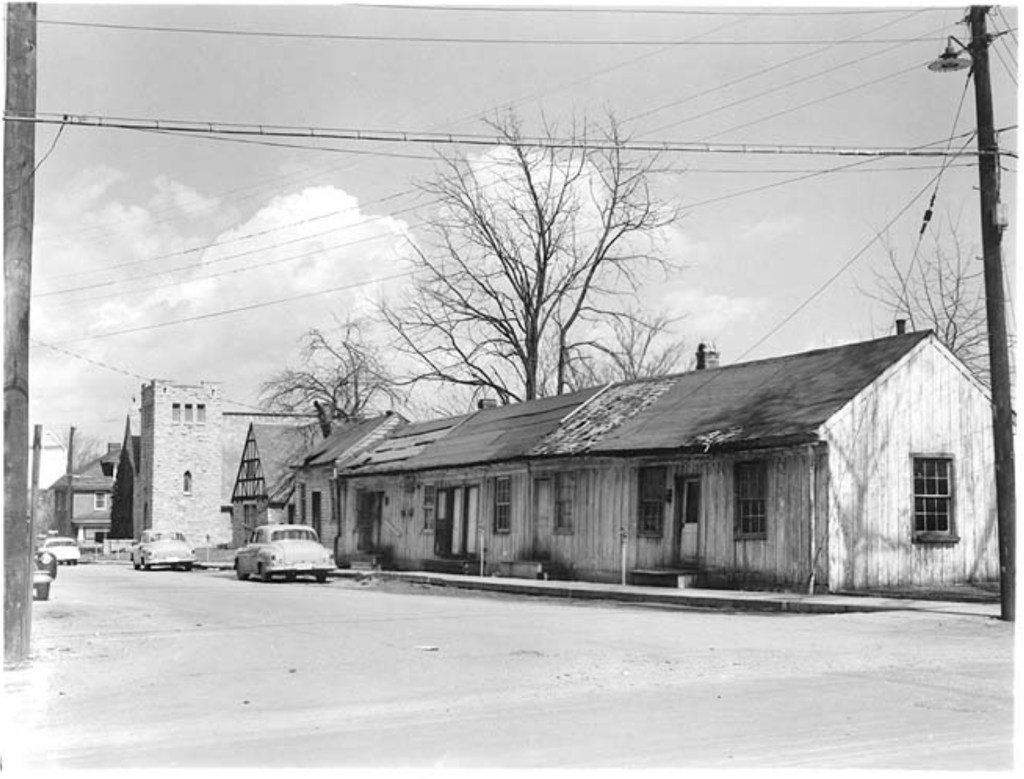
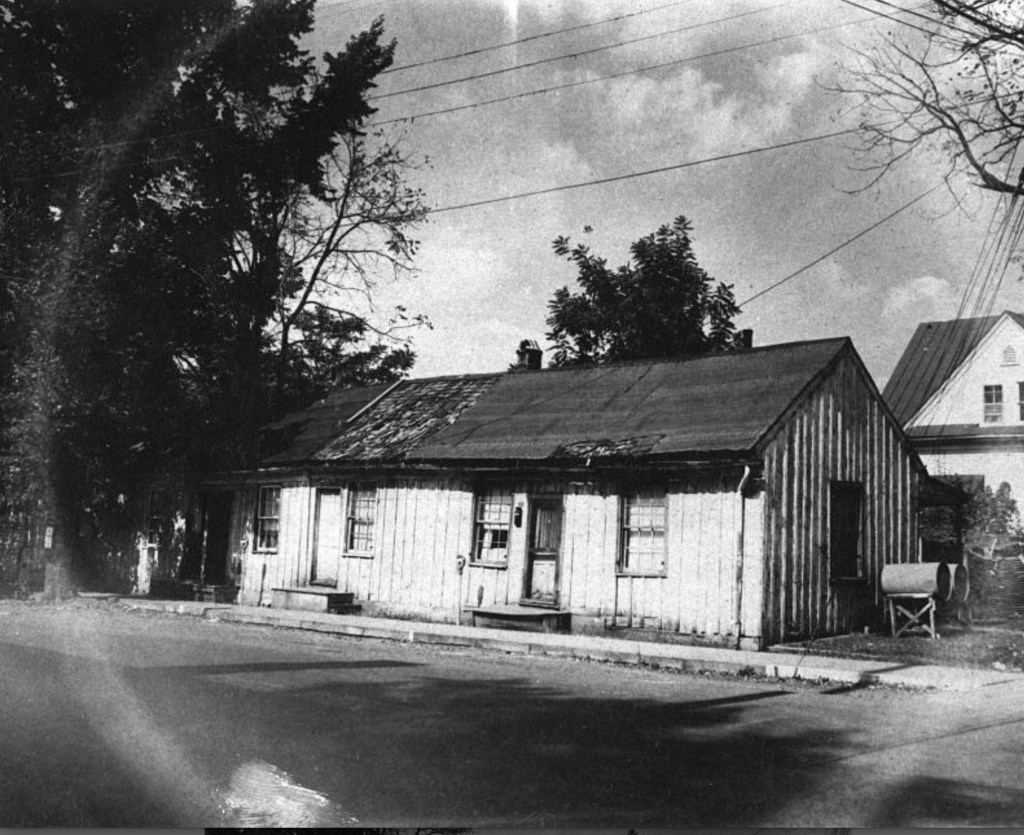
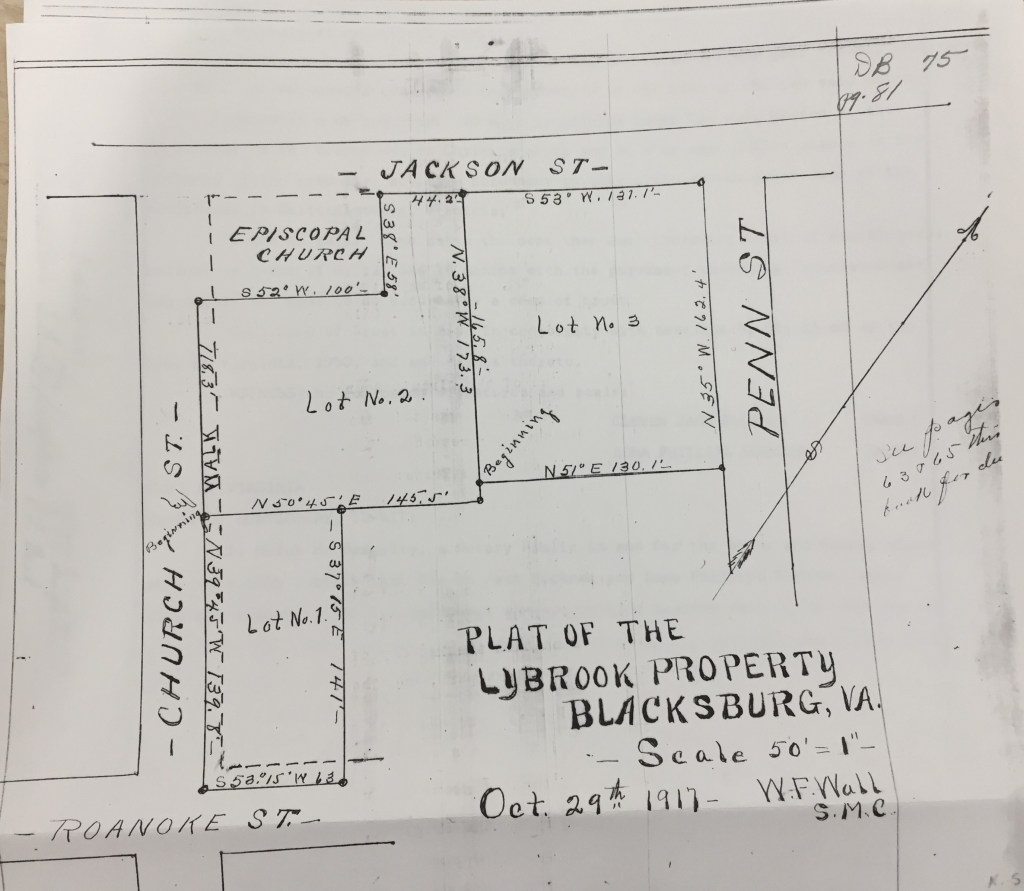
Lybrook Row, facing Church Street, was built by the Lybrook family as affordable housing for students. These two-room cottages (5 total) shared common walls and had no indoor plumbing. They were probably heated with a coal stove. The buildings were razed in the early 1970’s by Christ Episcopal Church before they built their new Education Wing. Today the depression from the building is visible in the church’s play yard. The 1917 plat (image below) indicates that this building was built on the Lot # 1.

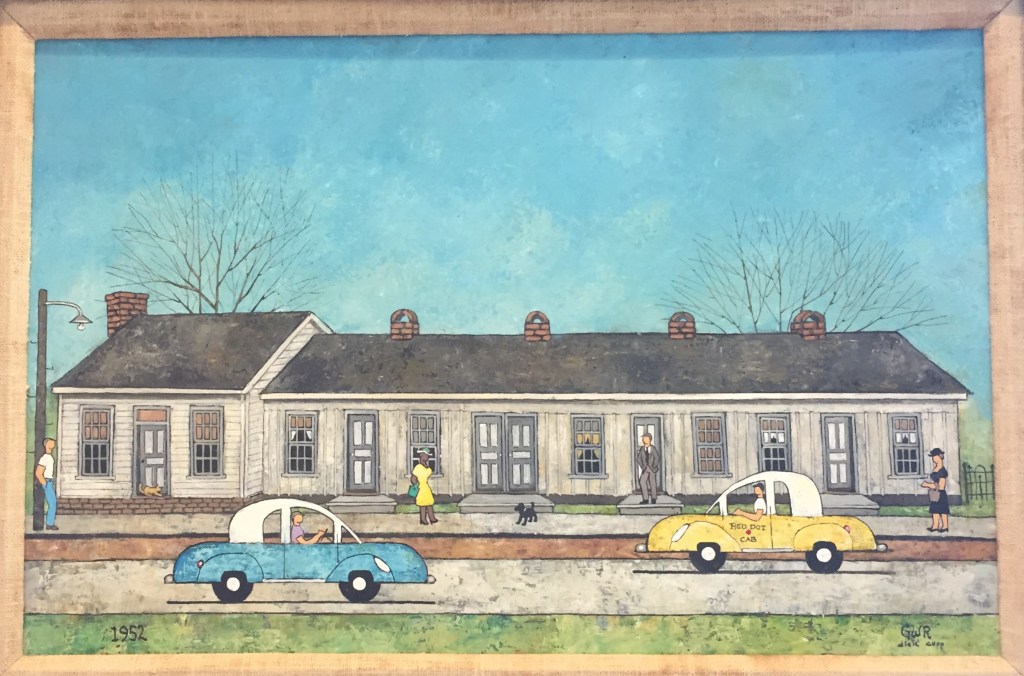
W.M. Lybrook Cheap Cash Store
The Lybrooks were industrious merchants and over time owned or operated several shops. Around the turn of the 20th century (possibly as early as the 1870s) they built a mercantile store, which faced on East Roanoke Street, at the north-east corner of Church and Roanoke streets. In this image, this two story building appears to be attached to the southern end of Lybrook Row.
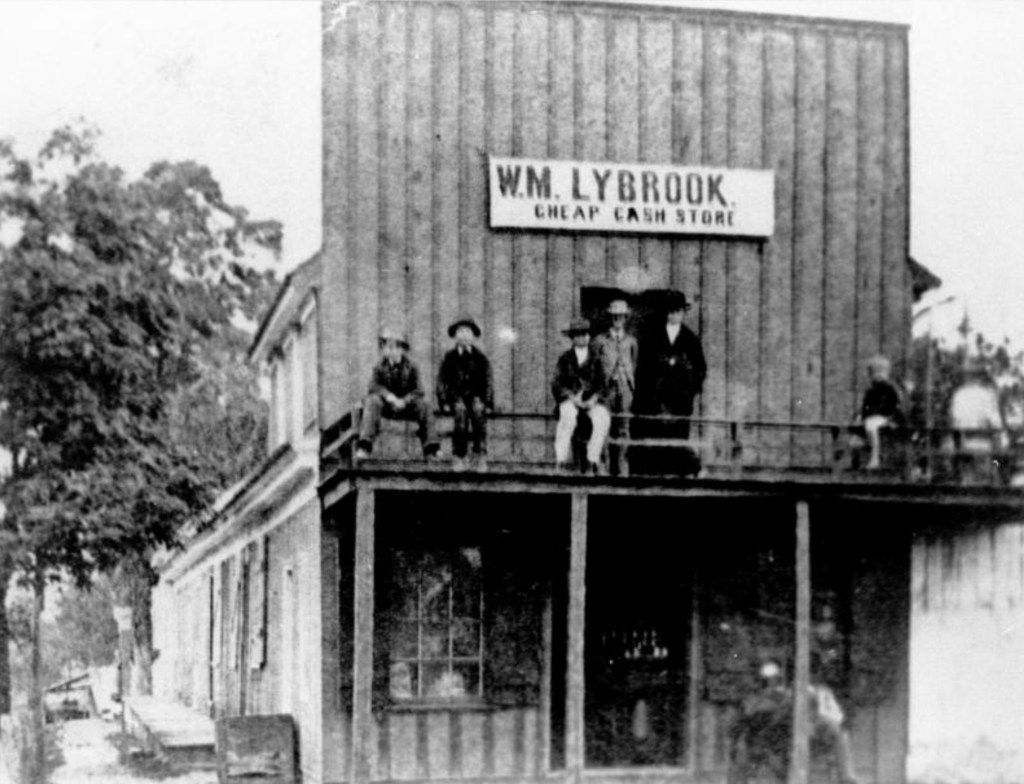
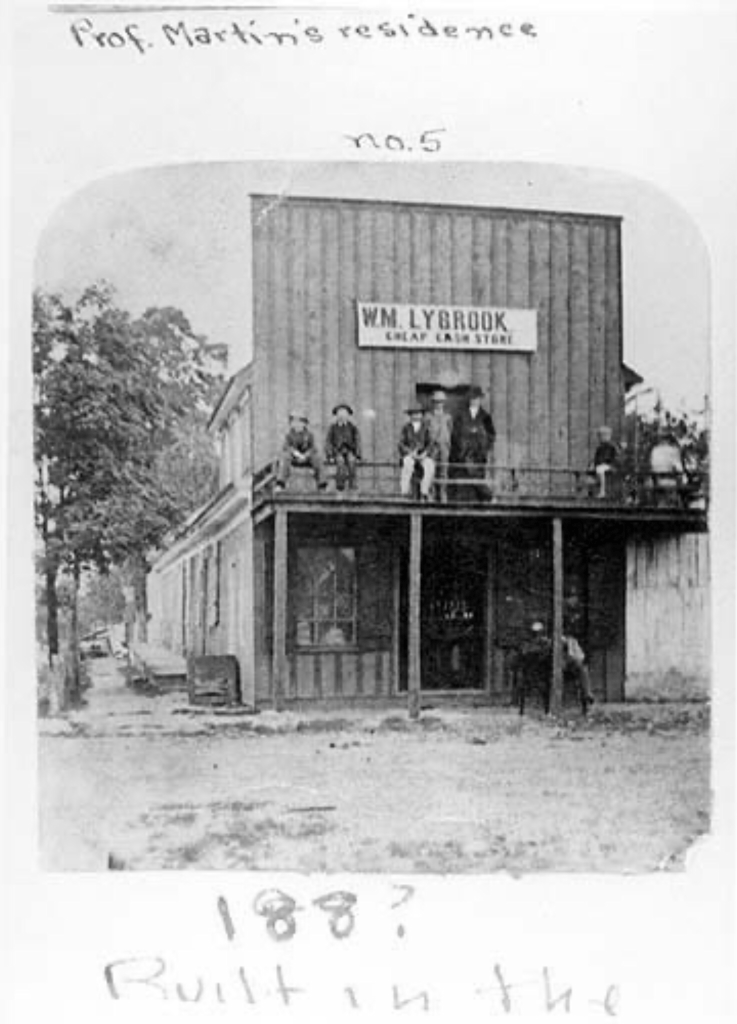


Dating Lybrook Row and the Cheap Cash Store
The exact date that these structures were built is being researched. The inscription on the image states that this was the residence of Professor Martin (April 26, 1817 – March 10, 1888). Charles Martin taught at the newly minted college, VAMC from 1872-1879, according to Harry Downing Temple (courtesy of Ed Marsh’s research).
According to Harry Downing Temple’s book, The Bugle’s Echo, A Chronology of Cadet Life, Vol 1, page 26-27 , referring to the first session of Virginia Agricultural & Mechanical College, 1872: “The College building [previously the Preston & Olin School] could not house thee entire student body, even with crowding three cadets to a room. Before the academic year had become well advanced a number of students were forced to take up lodging elsewhere. The village of Blacksburg responded quickly, albeit inadequately, to accommodate the over-crowded conditions of the College. Some homes rented rooms, and a few new buildings were erected near the campus for lodging purposes. A single-storied, many roomed, frame building, designed to house some of the overflow, was erected with private funds on Church Street at the northwest corner of Roanoke Street. The building, known as “Lybrook Row,” and dubbed by the cadets as “Buzzards’ Roost” or “Hell Row,” became the unofficial barracks, although the term ” barracks” was not used for cadet living quarters until the erection of Barracks Number One several years later.”
Gibson Worsham’s report, Survey of Historic Architecture in the Blacksburg Historic District, Montgomery County, Virginia, Virginia Department of Historical Resources (page 21), indicated that the Bodell Pottery kiln was at one time located on the site Lybrook Row was built. The workshop was built after David N Bodell arrived in Blacksburg, 1863 (page 20).

Lybrook Family
Sons, Henry, Philip and John Lybrook, were mentioned in the 1803 will of Baulser (Paulser) Lybrook (b. 1728, German Empire, d. 21 Jan 1803, Giles) of Sinking Creek, along with Paulser’s wife Anna Catherine Riem Lybrook. Catherine (1731-1816) inherited the home, furnishings, mill, meadow, orchard, garden and livestock where she and Paulser reside; George Henry (1755-1839) received the plantation upon which Baulser resides, located lower side of Sinking Creek; Philip (1757-1842) received land at the mouth of Sinking Creek; John (1761-1843) was given the Doe Run tract plus money; and daughter Catherine Philips (1761-1840) was given 80 pounds.
Phillip Lybrook was noted as a surveyor in a 1823 case involving Joseph Manderville vs David French in Giles County. And John Lybrook petitioned the Committee on Revolutionary Pensions in 1840, though he died three years later.
John Lybrook (1761-1843) married Anne L. Chapman (1761-1831) in Giles. One of their children, Philip was born in 1781, married Margaret “Peggy” Marrs (1792-1879) and lived a long life, dying 1871. Philip and Peggy’s child, John Lybrook (1820-1892) moved to Blacksburg, married Mary Ellen (Mollie) Peery Lybrook (1835-1915), and built their lovely brick home on Church Street, between Jackson and Roanoke Streets. He was a land speculator, a merchant, and devoted to the Presbyterian church. John and Mollie had many children: George P. (1859), Virginia “Jennie” Lybrook Davis (1859-1921), William Murray (1861-1925), John Barger (1864-1934), Ray, Clifton H. (1870-1916), Samuel Lybrook, Mabel Alice Lybrook (1874-1893).
Lybrook Documents & Information
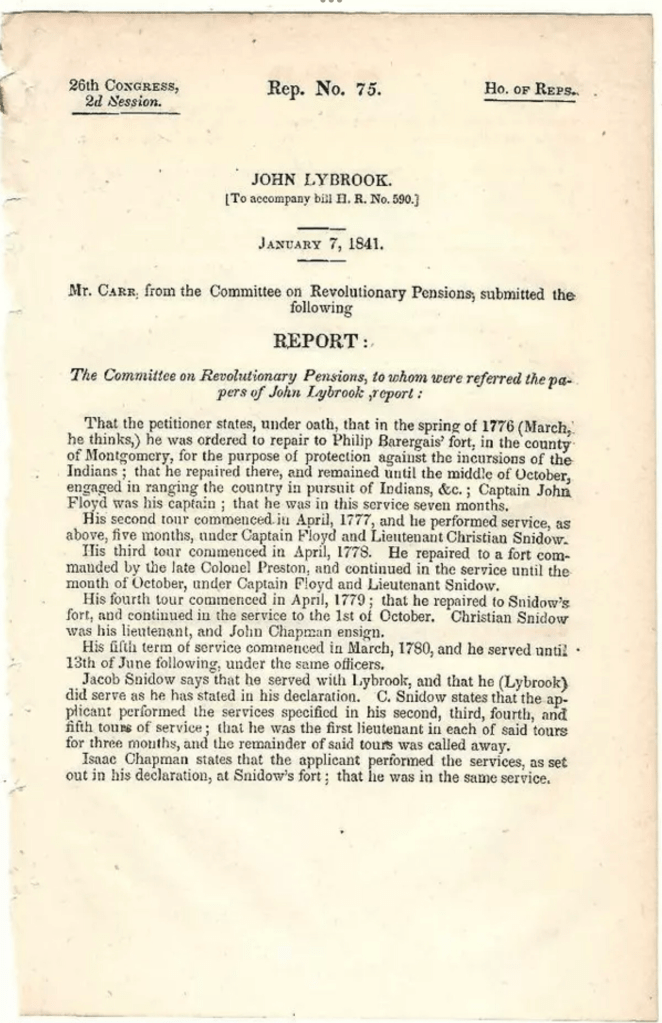
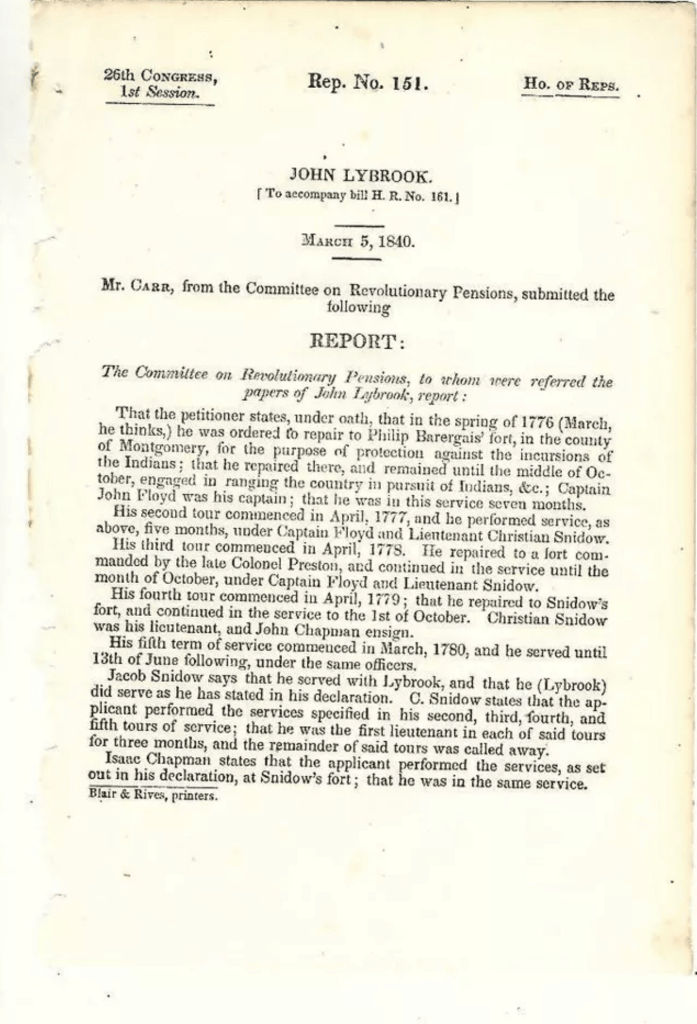

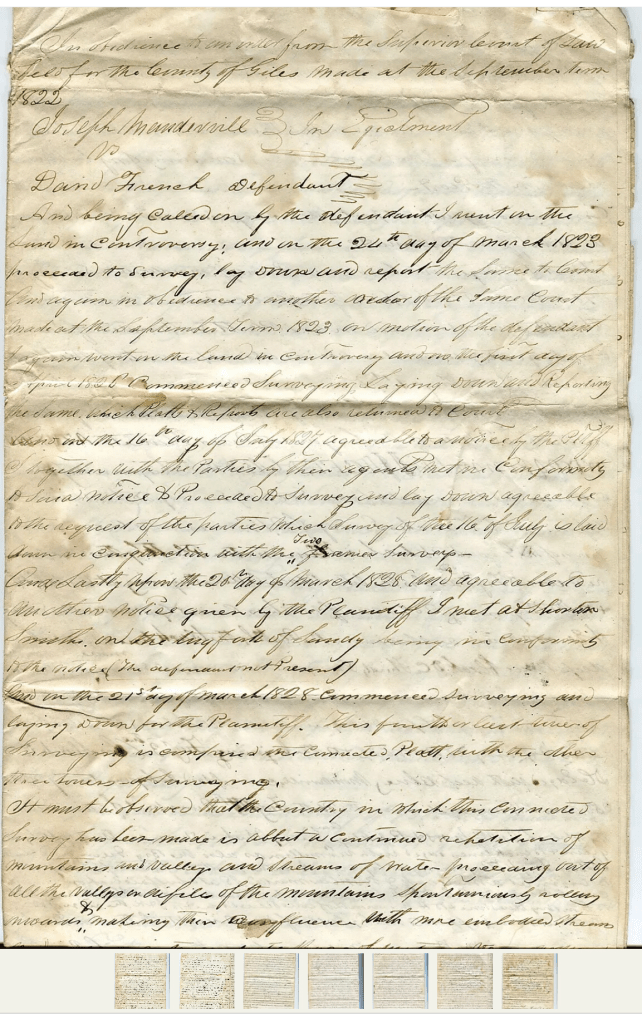

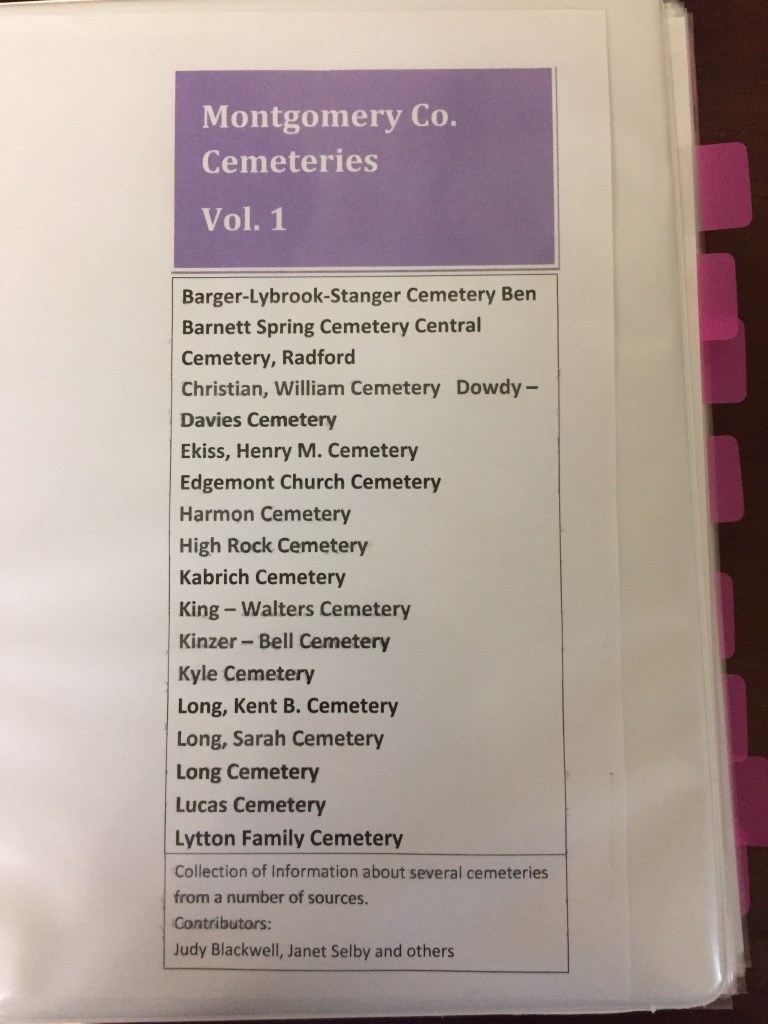
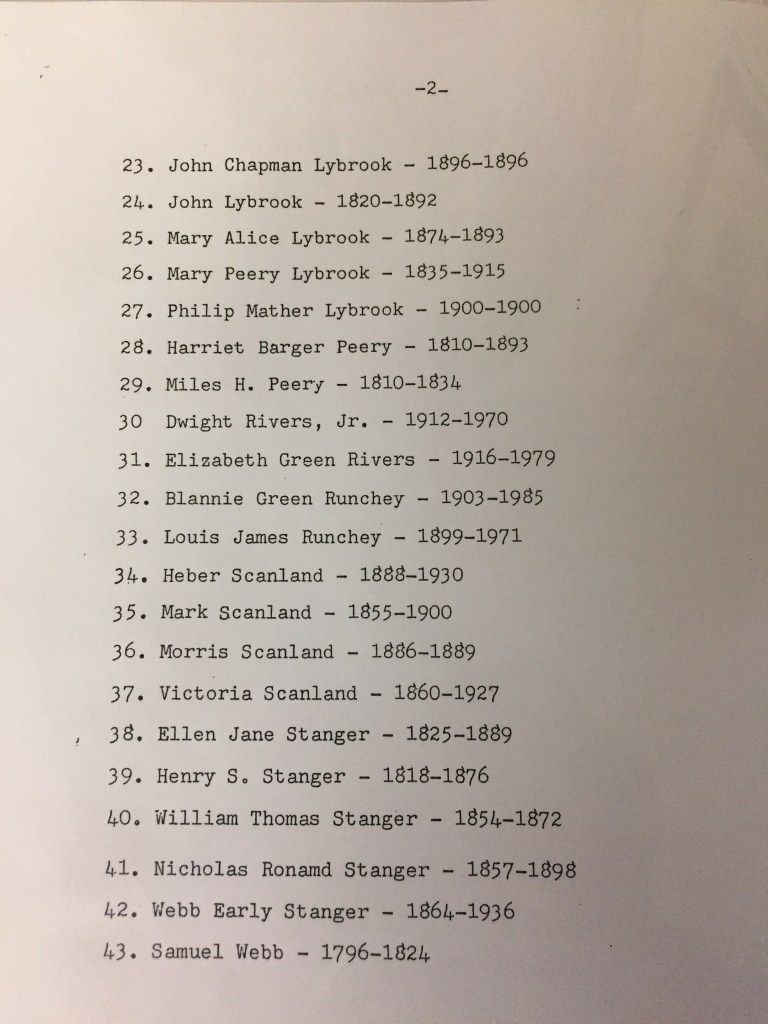
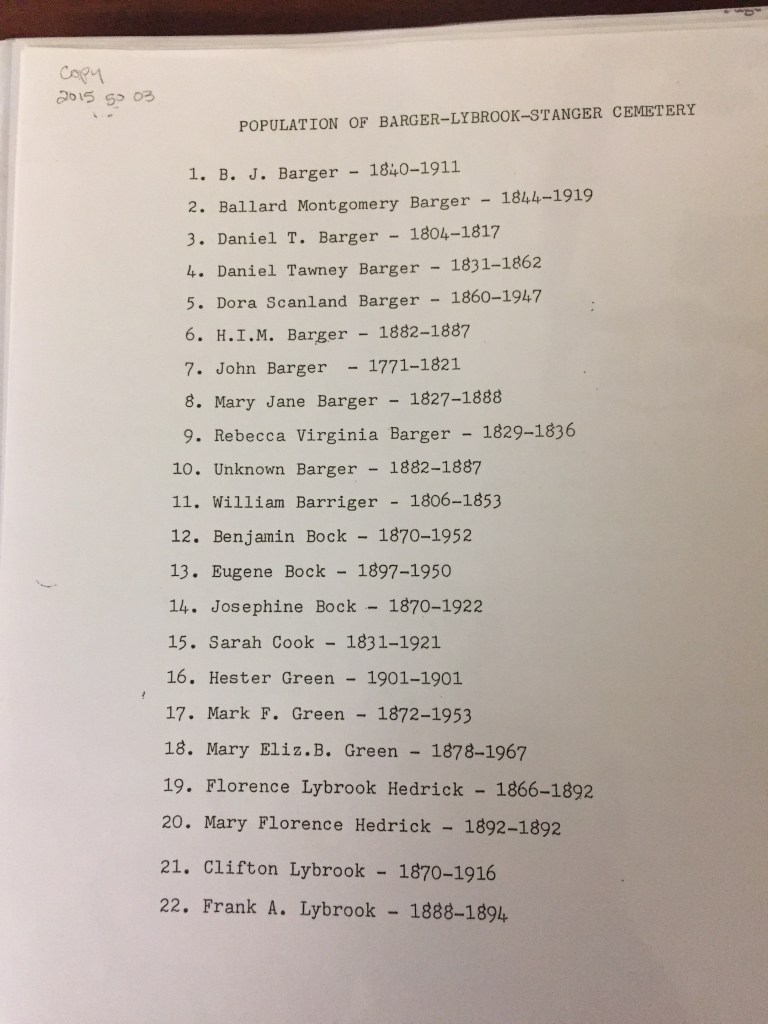


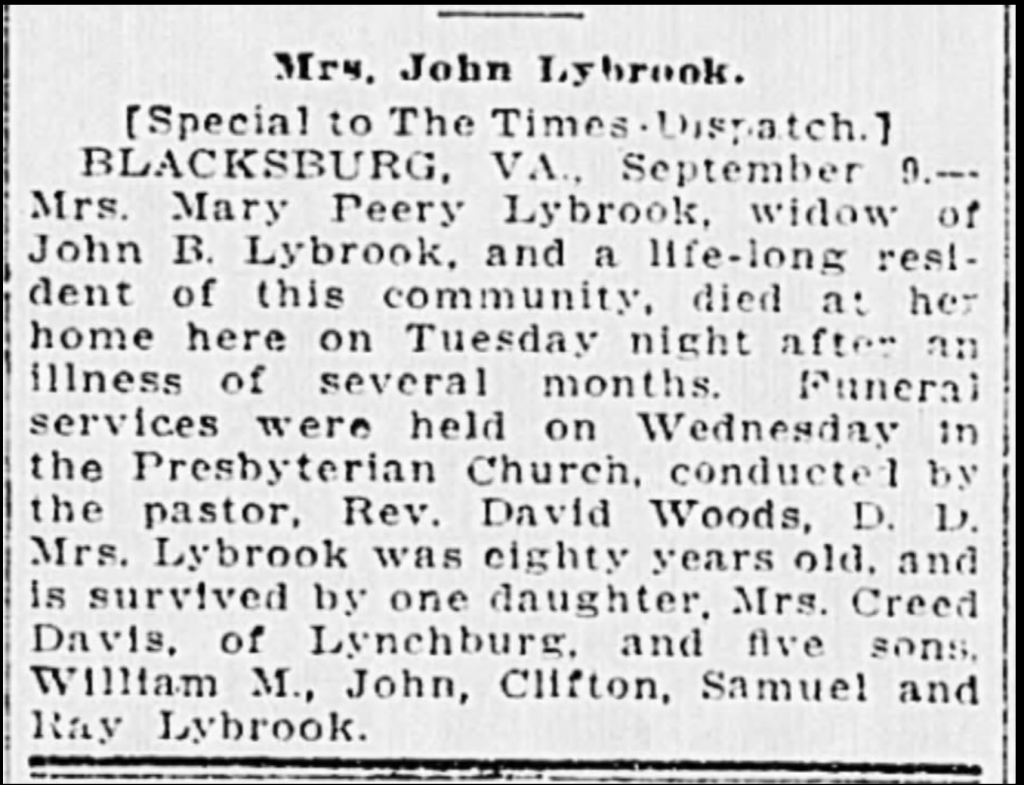

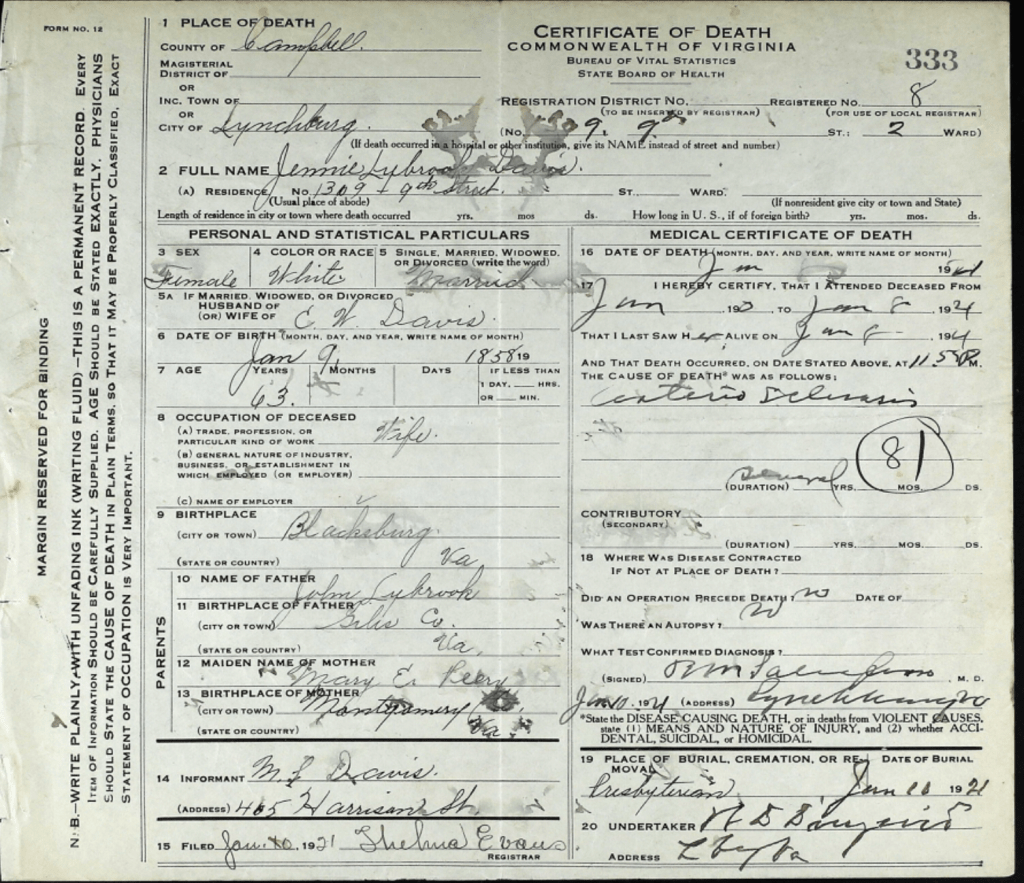

The Lybrook family left us many documents that are found in the Montgomery County Courthouse. Here are a few.
- Lybrook Index of Common Law and Criminal Cases
- Lybrook Deed Index
 Gathering Blacksburg History