
As the quiet town of Blacksburg grew through the mid-20th century, so did the need for modern places for visitors to stay. Early Blacksburg was a small, rural community where travelers often relied on boarding houses or small inns. But with two major changes—the rise of automobile travel and the rapid expansion of VPI (now Virginia Tech)—the town quickly found itself needing more modern accommodations.
Beginning in the 1950s, cars reshaped American travel. People were no longer dependent on trains or long-distance bus routes, and as families took to the highways, towns like Blacksburg needed lodging options connected to road travel. At the same time, VPI’s enrollment and campus footprint were rapidly increasing. Prospective students, visiting families, athletic teams, and conference groups all needed reliable places to stay close to campus.
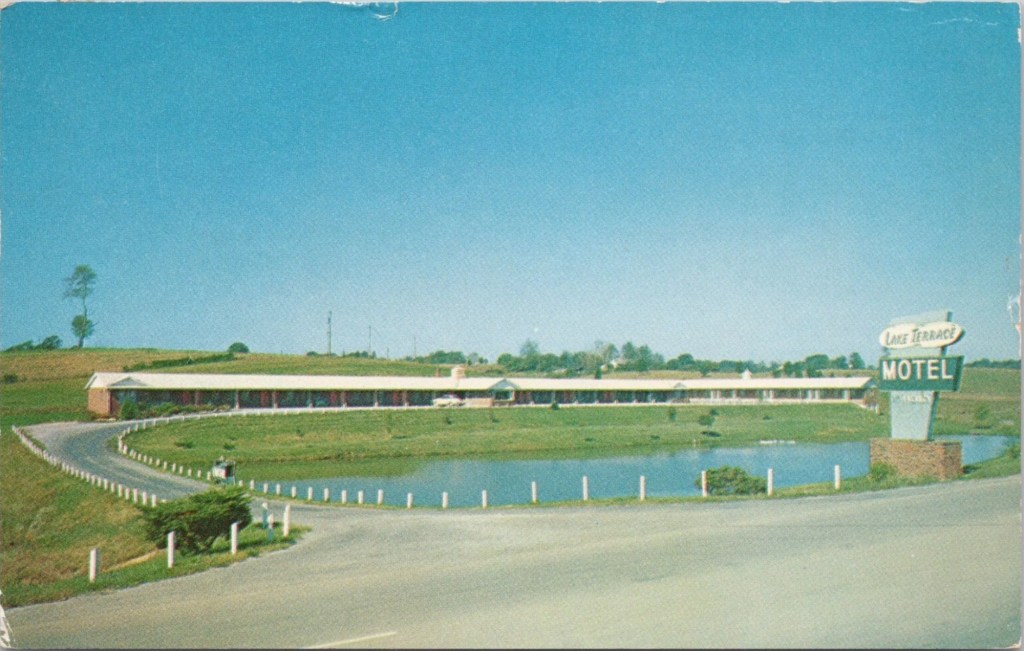
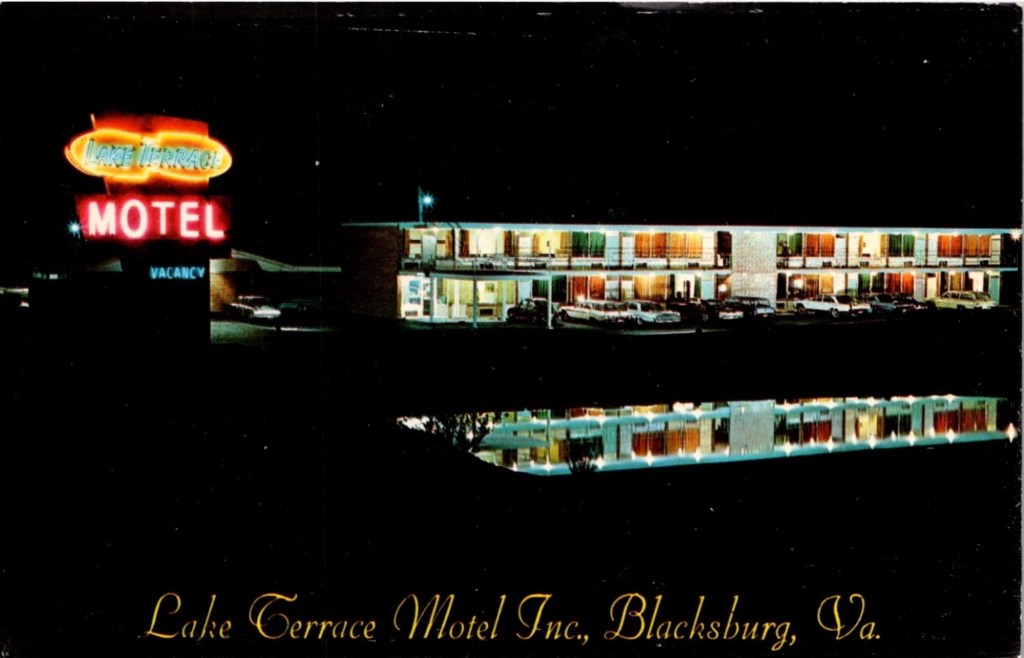
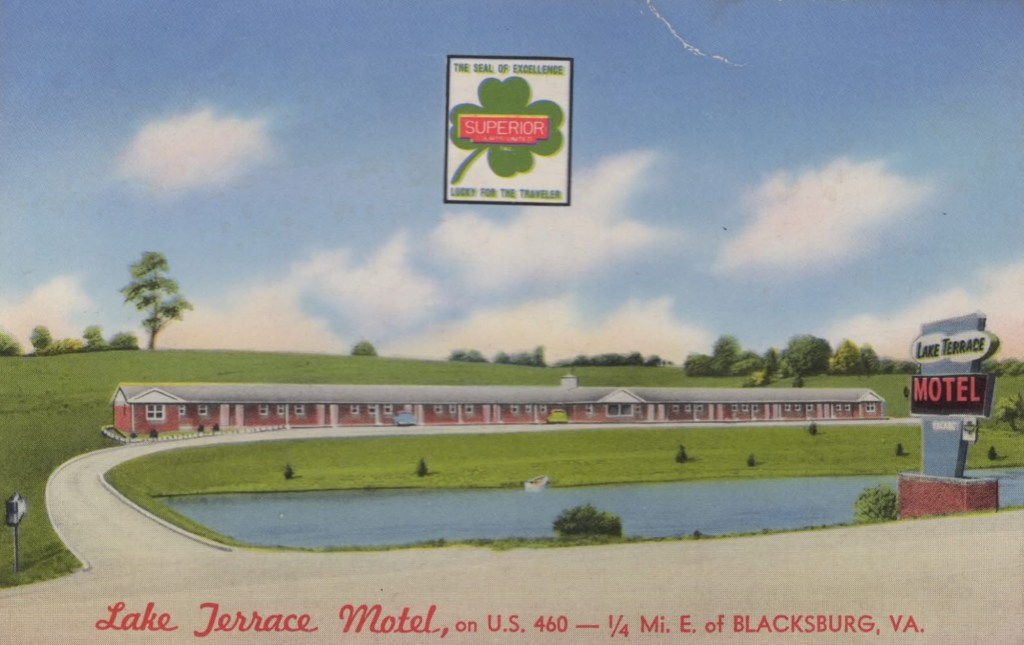
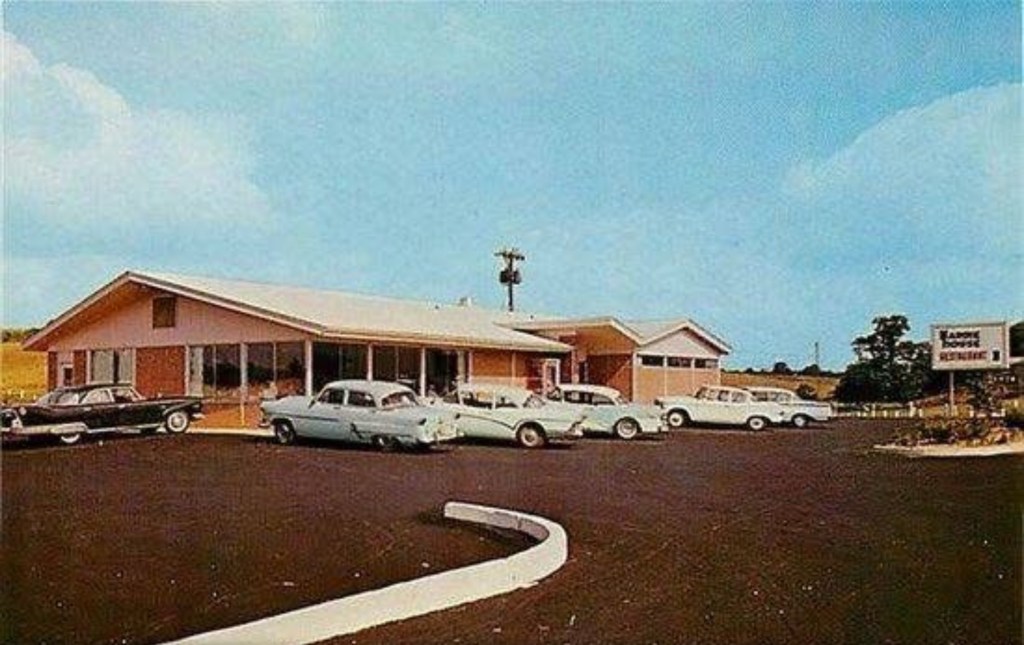
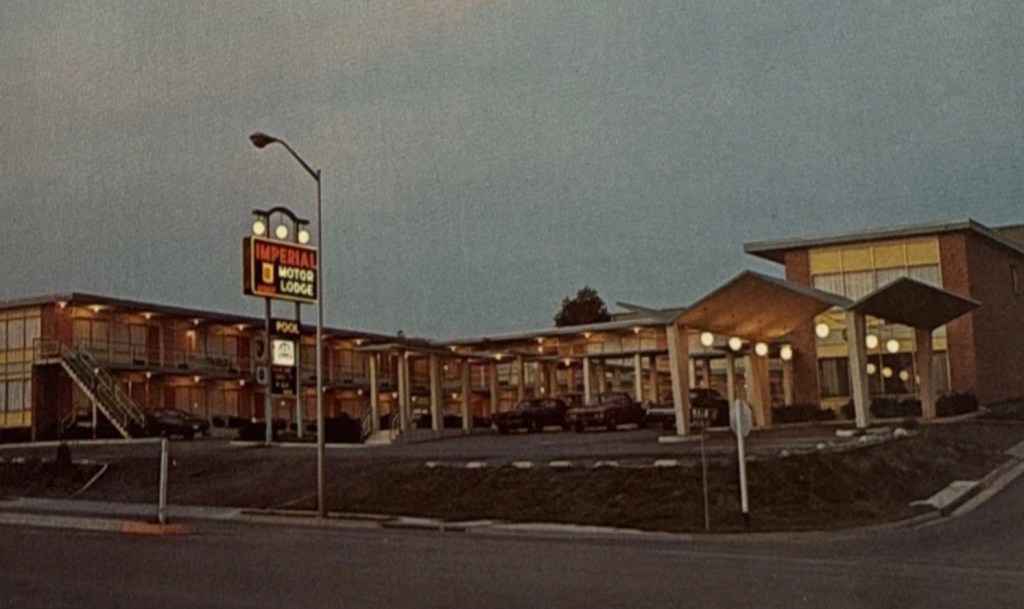
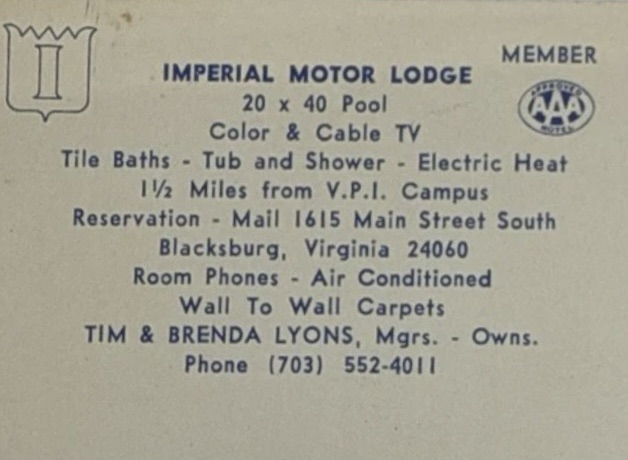
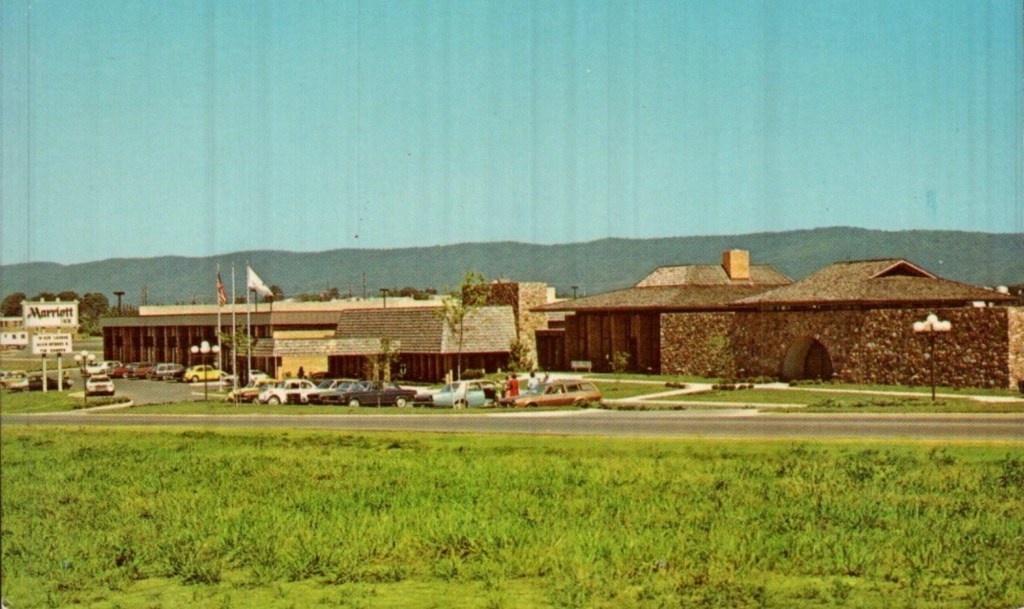
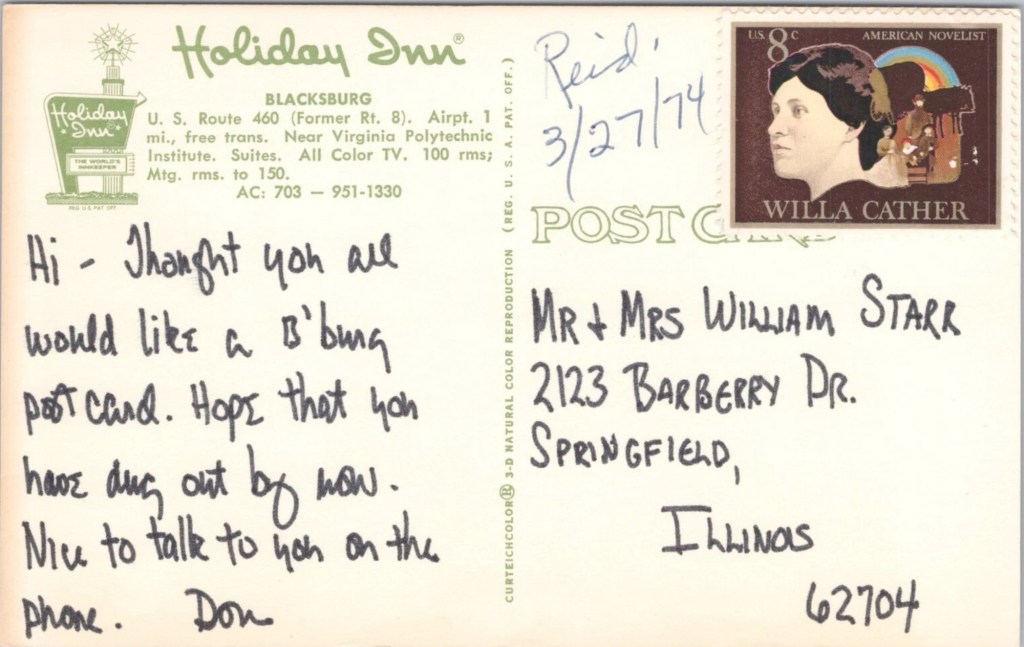
To meet this demand, the Lake Terrace Inn opened in the 1950s. It became one of Blacksburg’s first modern, full-service hotels, known for its well-loved Hardie House Restaurant. Soon after, the Imperial Inn expanded local lodging capacity. By the 1970s, national chains recognized Blacksburg’s growing profile as a university town. The Marriott Inn opened during this period, followed soon by the Holiday Inn, offering familiar amenities for families, business travelers, and university visitors.



Segregation and Limited Access for African American Travelers
While modern lodging was expanding in Blacksburg, segregation excluded African Americans from these facilities well into the 1970s in this region. Black travelers often faced significant obstacles finding safe and welcoming places to stay. Instead of being able to lodge in Blacksburg’s new hotels, they relied on alternatives:
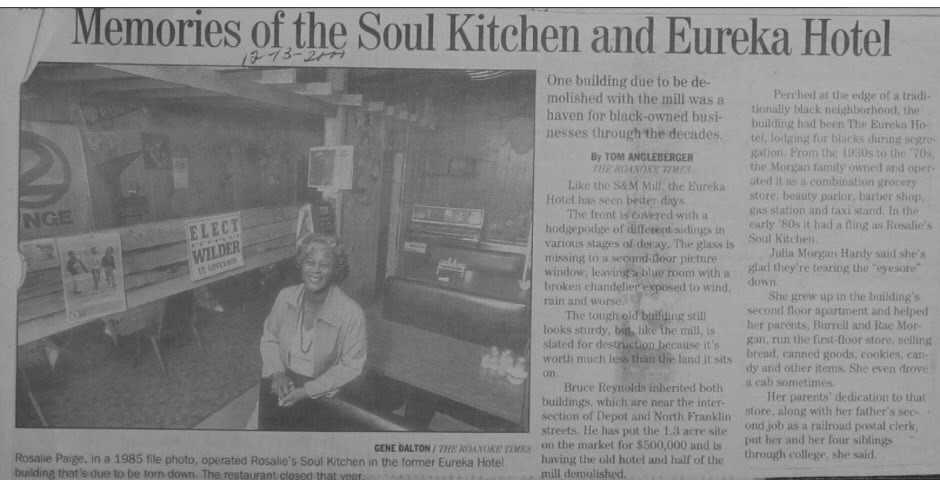
Christiansburg’s Green Book–listed Eureka Hotel, operated by the Morgan family, served as a crucial safe haven for African American visitors. African Americans also traveled to Roanoke, where more lodging options were available. Others found accommodations with local women of color who ran boarding houses and provided safe, respectful, home-based lodging.
This parallel lodging landscape reminds us that the growth of modern accommodations did not include every traveler equally and that local Black families and business owners played an essential role in meeting community needs during segregation.
Why Hotels vs. Motels?
The distinction between hotels and motels reflects how American travel patterns shifted:
Motels, designed for motorists (“motor-hotel”), typically offered exterior entrances and parking directly outside each room, ideal for quick overnight stops along newly developed highways. Hotels provided larger buildings with interior corridors and amenities such as restaurants, meeting rooms, and event spaces. As Virginia Tech grew and began hosting conferences, sporting events, and official gatherings, Blacksburg increasingly needed the services hotels could provide.
Together, motels and hotels tell the story of a town adjusting to new forms of mobility, new expectations for visitor services, and the growing influence of a rapidly expanding university.
From roadside motels to full-service hotels—and from segregated travel patterns to broader access—Blacksburg’s lodging history mirrors its transformation from a quiet mountain town to a vibrant university community welcoming visitors from across the country.
Lake Terrace Motel
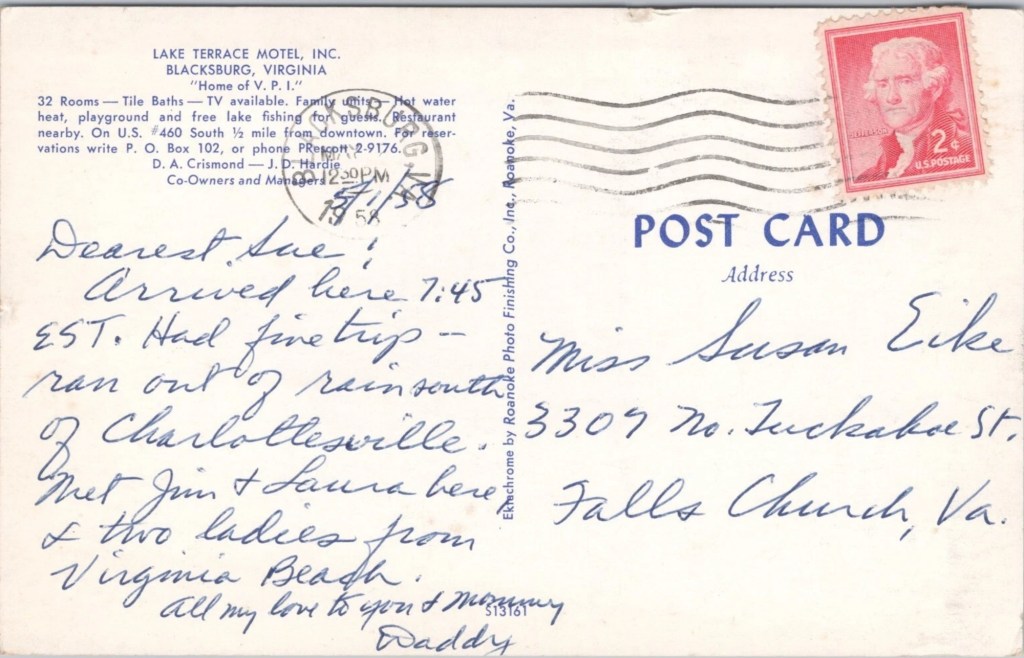
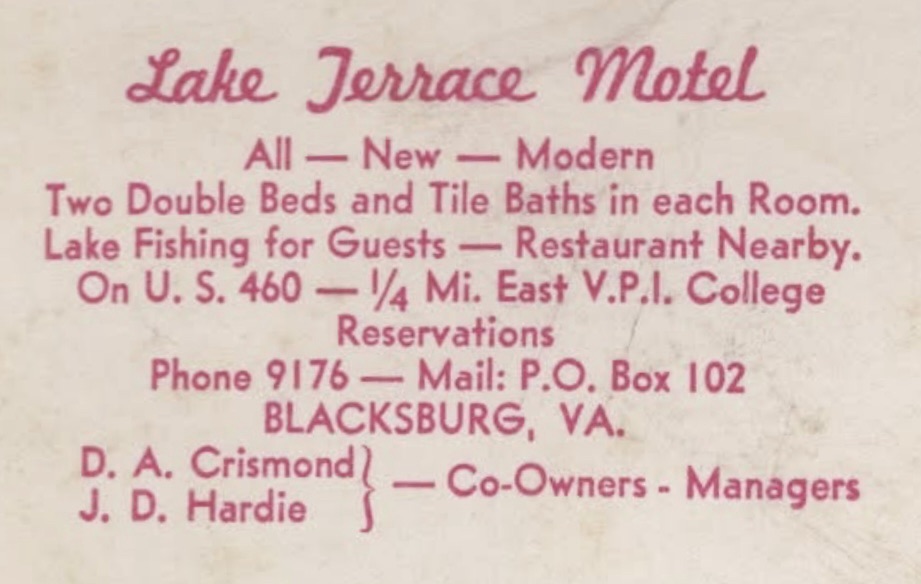
According to the backs of the postcards, the motel and its restaurant were operated by D. A. Crismond and J. D. Hardie. The Hardie House Restaurant was well known in the community for its excellent food and more upscale atmosphere. When the motel was built—possibly as early as 1957—the site was still located in the county. The building was later razed to make way for the development of First & Main, across from Landsdowne Road.
Tech Motel
This motel still stands at the southeast corner of Jackson and Draper Streets, with the former motel office now home to the pizza shop. Each room originally featured a full bathroom, a modern convenience at the time. The architect and co-owner was George Stern, a VPI professor, who partnered with Howard Gates. According to Stern’s son, all the room doors were painted different colors to help guests easily find their way. The motel itself was constructed by Mr. Agnew.
 Gathering Blacksburg History