
The German Middle Settlement—spanning present-day Pulaski, Giles, and Montgomery Counties—holds a rich and well-documented place in our region’s history. This page will bring together a curated collection of books and resources that shed light on the families, traditions, and stories that shaped this community, offering a deeper understanding of their lasting influence in Southwest Virginia.
German New River Settlement, Virginia by U.S.A. Heavener.
This book was first printed in 1929 and then reprinted by Anita Comtois, Clearfield in 1976, 1992, 1994 & 2002 by Genealogical Publishing Co, Baltimore Maryland. Though the book is out of print, copies can be found to borrow or purchased. The following families are mentioned:
“BARGER, HARLESS ( Herlos, Herlash, Horlas, Herlass and Herlos) HAEVEN, Haven HEAVENER (Hofner,original German name) Hafner, Haffner, Haffenner, Hefner, Heffner, Heffenner, Hevner, Hevenner, Hivenner HARMAN, (Harmon, Harmen,) HORNBARGER, (Harnberger), KIPPS, McCOY, (McKay,) LINKOUS,( Linkus ) LORTON, (Laurton) PEPPER, PRICE, Preisch, (Preis, Pruse, Preinz, Prenz), SHELL (Scholl, Schull), SMITH (Schmidt), SNIDER (Snidow, Snido), TROLINGER (Trollinger), WALL, (Wahl,) WILLIAMS, Wilhelm”


Germans on the Western Waters: Artisans, Material Culture, and Hybridity in Virginia’s Backcountry, 1780-1830 by Spenser David Slough, 2015
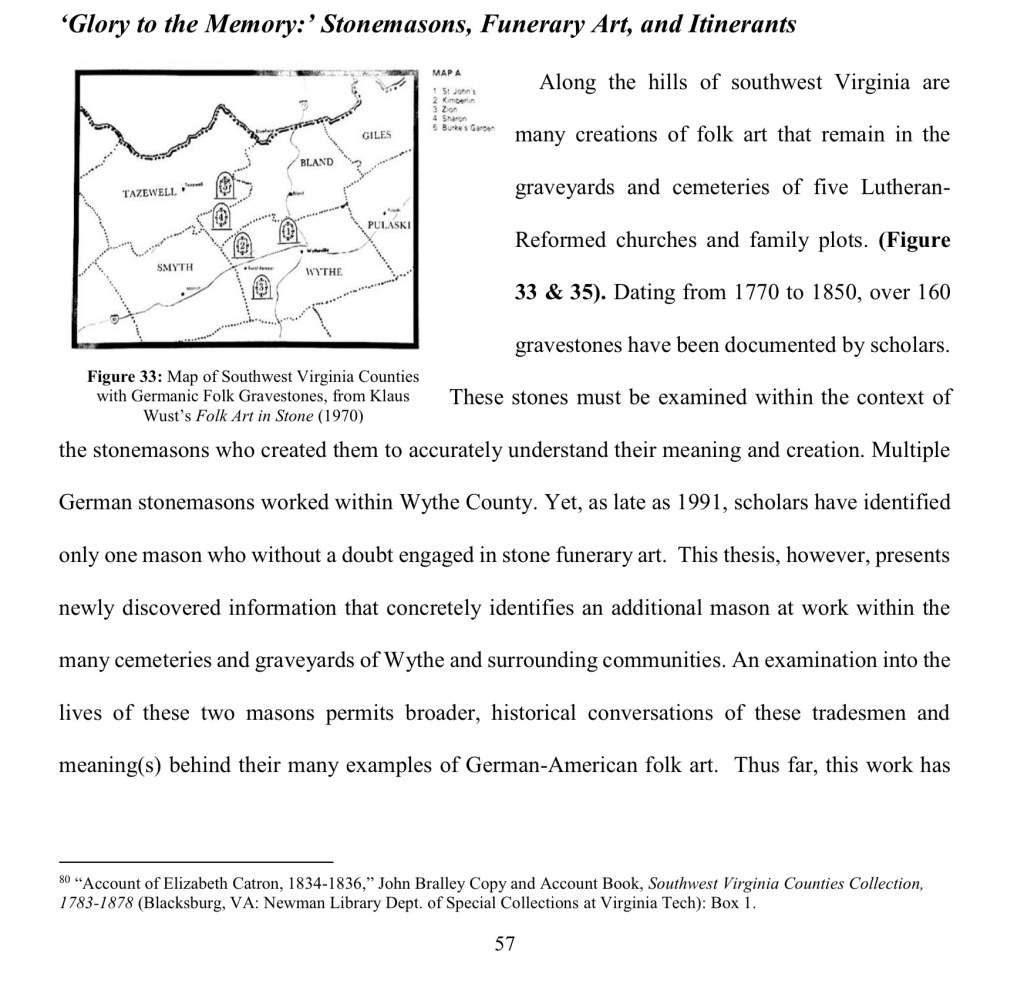
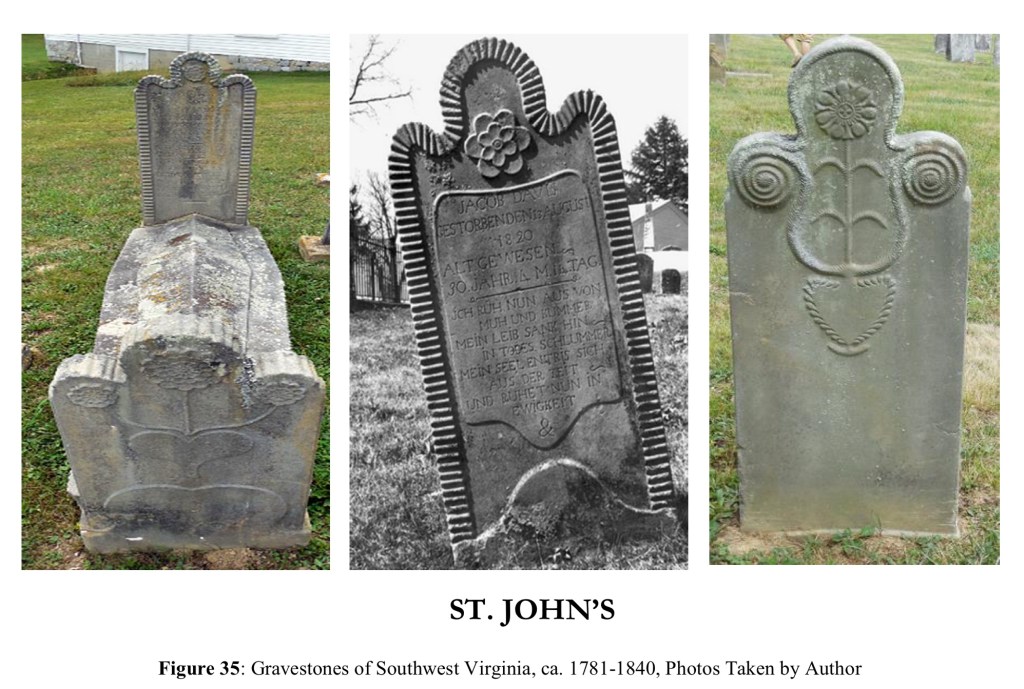
Though centered on Wytheville’s German settler culture, Spencer David Slough’s thesis offers valuable insights that also deepen our understanding and appreciation of the Germans who made the Montgomery County region their home.

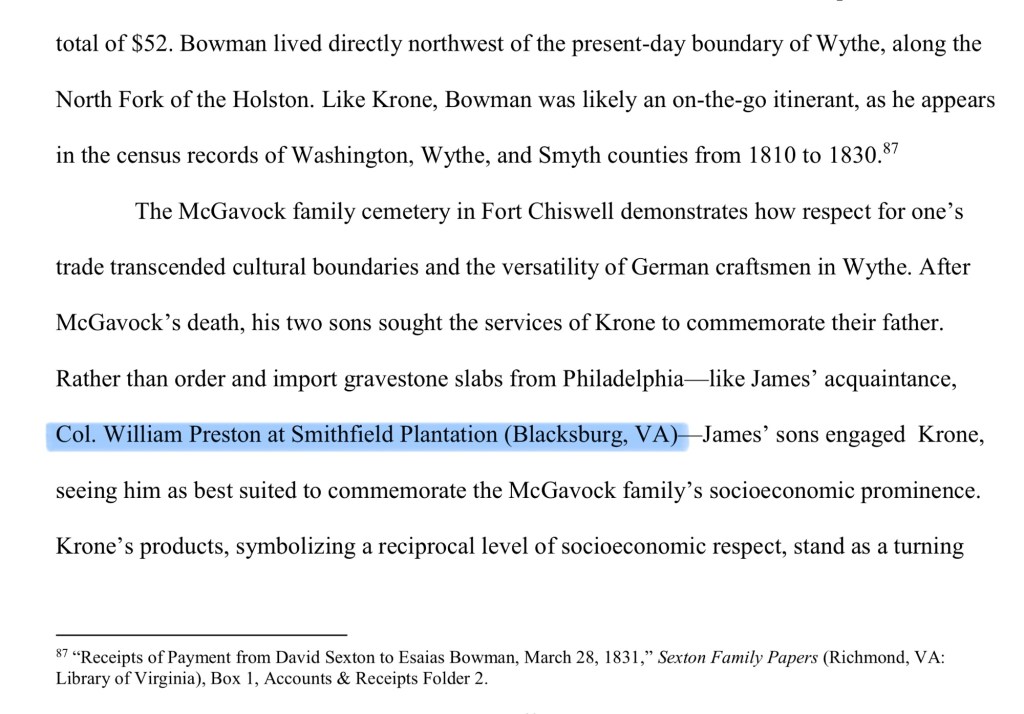
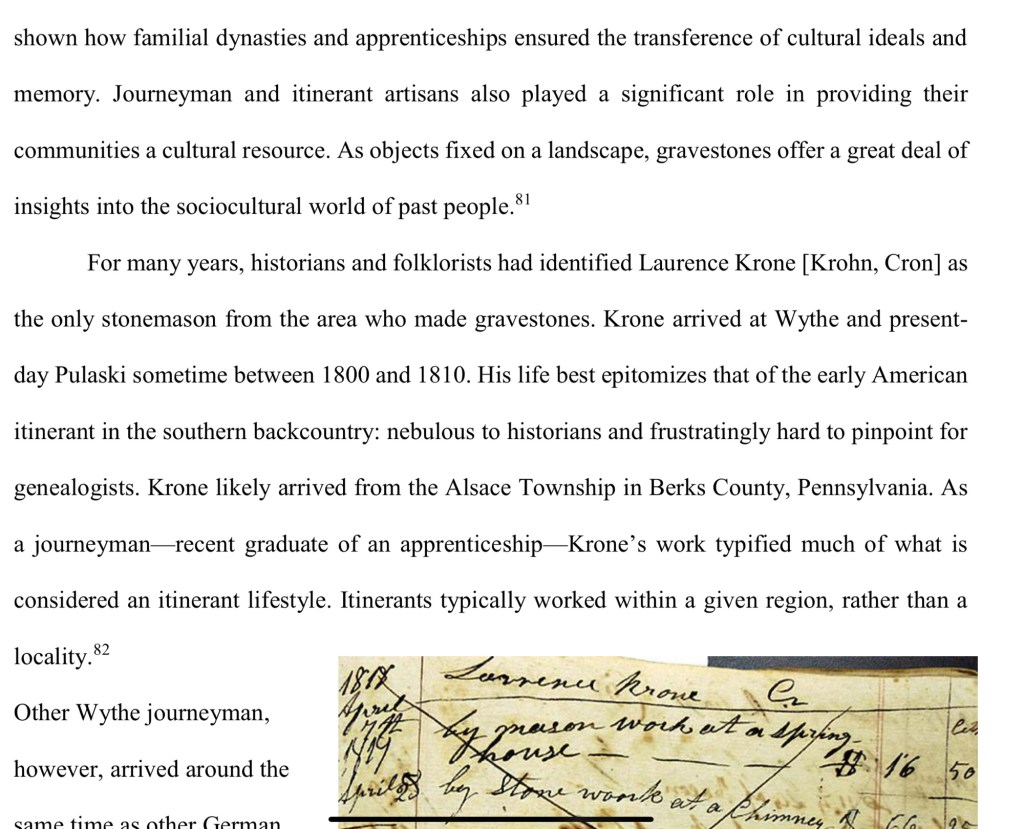
Lawrence Krone, an itinerant stone mason from Berks County, Pennsylvania, was known for crafting beautiful cemetery markers (p. 57). He arrived at the turn of the 19th century and worked in current day Wyth County. On page 62, the thesis notes that Col. William Preston ordered grave marker slabs from Philadelphia; however, the reference for this information was omitted.
Adam Harman, the New River, and Tom’s Creek: An Analysis of the Earliest Documentary Records by Ryan S. Mays, Smithfield Review, Vol. 20, 2016.

The article highlights how these early records give us a window into the first Euro-American presence in southwest Virginia. It pieces together treaties, court orders, and land grants to show how settlers like Harman—and even local place names—first made their way into the written record.
 Gathering Blacksburg History
One thought on “German Settlement of Southwest Virginia”